Indian Peafowl's Expanding Range Sparks Conflict with Farmers in Eastern Himalayas
The Indian peafowl, a national symbol and protected species, is causing significant agricultural damage in the eastern Himalayas, exacerbating tensions between farmers and conservationists.
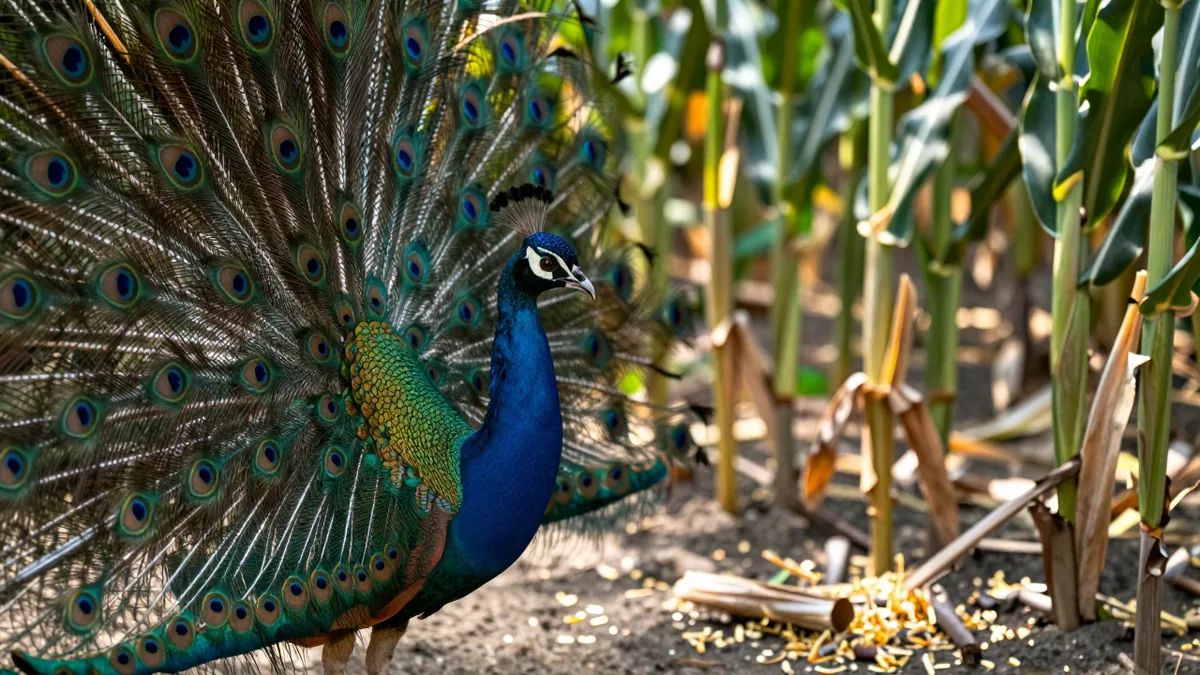
The Indian peafowl (Pavo cristatus) has long been revered as a cultural icon and national symbol in India. However, in recent years, its expanding range and soaring numbers have turned it from a celebrated bird into a contentious presence in the eastern Himalayas.
Farmers in the region are struggling to cope with the peafowl's increasing presence, which is causing significant agricultural damage and exacerbating tensions in communities reliant on subsistence farming. The birds are trampling crops, eating valuable produce, and altering biodiversity, leading to resentment among farmers.
A Glaring Policy Gap
The Indian peafowl is protected by wildlife laws, making it difficult for farmers to manage its population. While conservation efforts focus on celebrating the bird's beauty, they often overlook the burdens borne by those who live alongside it. This disconnect between national-level conservation narratives and local lived experiences is creating a growing sense of frustration among farmers.
| Species | Listed in Schedule I of the Wildlife (Protection) Act, 1972 |
|---|---|
| Indian peafowl | Yes |
| Tigers | Yes |
| Elephants | Yes |
Farmer Grievances
Farmers in the eastern Himalayas are speaking out about the peafowl's impact on their livelihoods. They are forced to take turns guarding fields from dawn to dusk, a task that pulls them away from other essential household and community work. The birds have also grown remarkably bold, walking into courtyards to peck at drying maize and beans.
| Location | Farmer's Testimony |
|---|---|
| Chota Suruk | "It has made our life as farmers difficult. It doesn't let paddy get harvested, nor does it let dalley (round chillies) ripen… it eats everything!" |
| Soreng above Teesta Bazar | "We used to hear their calls from the distant forests and feel a sense of joy. Now, that same call is an alarm bell. By the time we run to the fields, a flock of ten or fifteen has already ruined a week's worth of labour." |
Expanding Ranges and Institutional Hurdles
The Indian peafowl's population is exploding, even moving into areas where it was once unheard of. While India has developed species-specific plans for elephants, leopards, and wild boars, there's no such plan for the Indian peafowl. The institutional mess, with different government bodies working in silos, is adding to the chaos.
| Region | Peafowl Sightings |
|---|---|
| Western Himalaya | Frequent sightings |
| Central Himalaya | Frequent sightings |
| Eastern Himalaya | Frequent sightings |
Is the Indian Peafowl Native?
Historical records suggest that the Indian peafowl is a recent arrival in many parts of the Himalaya. The peafowl's spread into the Himalaya may be linked to climate change, which is altering habitats across the region. Rising temperatures and erratic monsoons have created favourable conditions for peafowls.
The answer to the question of the Indian peafowl's nativity lies in understanding the complex relationships between climate change, habitat alteration, and species migration. As conservationists, ecologists, and policymakers look to the future, the bird forces a difficult but necessary conversation. When does a species cease to be a conservation priority and become a management challenge?
And how do we balance national symbolism with local survival?
The solution lies not in choosing one over the other, but in listening to the voices of those who live alongside the bird, farmers in the foothills of the Darjeeling-Kalimpong Himalaya, every day. For many farmers, the bird's vibrant feathers are a vivid reminder of ruined harvests, lost income, and the growing challenge of feeding their families. It is in these quiet, often-overlooked moments that the true human cost of rigid and romanticised conservation policies becomes painfully clear.
Source: Mongabay India