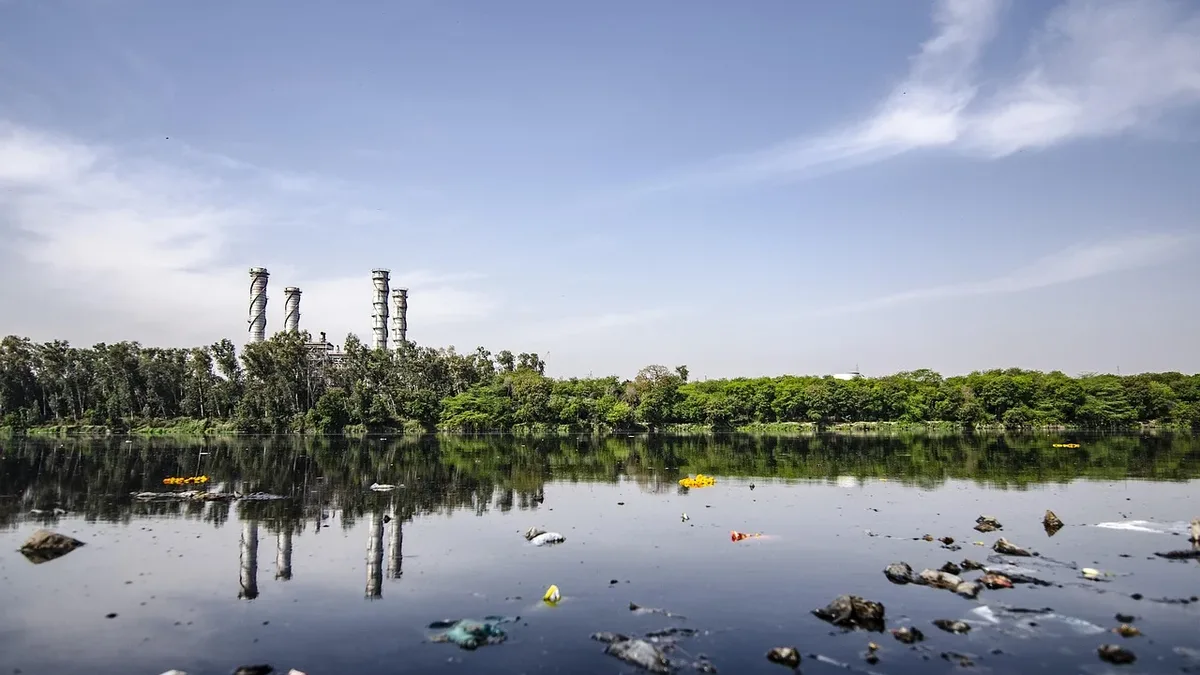
Sources
| Country of origin | United States |
|---|---|
| First created | 1970s |
| Original use | Industrial solvent and degreaser |
| Chemical formula | C₂HCl₃ |
| State at room temperature | Liquid |
| Odor | Sweet, chloroform-like |
| Primary environmental concern | Groundwater contaminant |
Origin and history
Sources as an environmental contaminant in urban settings does not originate from a single point but is a collective term for the diverse origins of pollutants entering a city's environment. The concept of tracking and categorizing these sources emerged alongside the industrial revolution of the 18th and 19th centuries, as cities became focal points for concentrated waste and emissions. Historically, the primary sources were industrial point sources, such as factory smokestacks and waste pipes, which discharged directly into the local air and waterways. The mid-20th century saw a significant shift with the rapid proliferation of mobile sources, particularly the internal combustion engine in automobiles, which transformed urban air pollution profiles. In recent decades, non-point sources like agricultural runoff carrying pesticides and fertilizers into drinking water reservoirs have become increasingly documented and concerning. The history of contaminant sources is, therefore, a timeline of evolving human activity, where each era of technological and economic development introduces new pathways for pollutants to enter the urban ecosystem.
What it is for
The term "Sources" in this context serves the critical function of identifying and classifying the origins of pollutants to enable effective mitigation and public health protection. Its primary purpose is to inform regulatory frameworks by distinguishing between point sources, like a specific manufacturing plant, and non-point sources, like urban stormwater runoff. This classification is fundamental for assigning legal responsibility and developing targeted control technologies, such as scrubbers on industrial chimneys or catalytic converters on vehicles. Understanding sources is also essential for environmental modeling and forecasting, allowing scientists to predict how pollution levels will change with urban growth or new industrial activities. For public health officials, pinpointing sources is the first step in tracing the pathway of an exposure, such as linking lead in drinking water to corroding service lines. Ultimately, the systematic study of sources aims to break the link between human activity and environmental degradation by providing the evidence needed to intervene at the origin.
Overview
Contaminant sources in a city represent the myriad entry points through which harmful substances infiltrate the air residents breathe and the water they drink. These sources are broadly categorized as stationary (point), mobile, or area (non-point) sources, each with distinct characteristics and challenges for management. Stationary sources include power plants, incinerators, and industrial facilities that emit pollutants like sulfur dioxide, particulate matter, and heavy metals from fixed locations. Mobile sources encompass the vast network of road vehicles, aircraft, and marine vessels that release nitrogen oxides, carbon monoxide, and volatile organic compounds directly into the urban atmosphere. Area sources are diffuse and include activities like residential wood burning, solvent use from commercial products, and aggregated emissions from many small businesses. For water, key sources range from wastewater treatment plant discharges and combined sewer overflows to leaching from landfills and contaminated sites into groundwater aquifers. The interaction of these sources creates a complex pollution burden, where contaminants can also transfer between media, such as airborne particles settling into water reservoirs.
What to know
It is crucial to know that the relative contribution of different contaminant sources shifts over time and varies dramatically from one city to another based on its industrial base and geography. A city reliant on heavy manufacturing may have a dominant point source profile, while a sprawling car-dependent metropolis will be dominated by mobile source emissions. For drinking water, the primary concern in older cities is often the legacy infrastructure itself, with lead service lines or corroding pipes becoming a direct source of metal contamination. Understanding that many sources are not immediately obvious is key; these include dust resuspension from roads, leaching from construction materials, and atmospheric deposition of pollutants onto watersheds. It is also important to know that source control is almost always more effective and less costly than attempting to manage the pollutant after it has dispersed into the environment. Citizens should be aware that while regulatory agencies maintain inventories of major point sources, comprehensive tracking of all non-point sources remains a significant scientific and regulatory challenge, leaving gaps in the full understanding of exposure pathways.
Common questions
A common question is whether contaminants in a city's air or water come from local sources or are transported from elsewhere, and the answer is typically both, with proportions depending on the pollutant. People often ask how a specific industrial facility is monitored, which involves continuous emissions monitoring systems for stacks and periodic compliance testing, with data reported to environmental agencies. Another frequent inquiry concerns the safety of tap water, which requires understanding the water utility's source water assessment, detailing potential contamination sources in the watershed. Residents commonly want to know what the largest single source of air pollution in their city is, which for many urban areas is now road traffic, though this can vary. Questions also arise about the role of natural sources, such as wildfires or geological arsenic, which can contribute significantly to pollution loads and complicate management efforts. Finally, individuals often ask what they can do, which directs the conversation to personal choices that reduce mobile source emissions and residential pesticide use, though the systemic nature of many sources limits individual impact.
Pros and cons
The primary pro of a detailed understanding of contaminant sources is that it enables targeted, cost-effective interventions and regulations that can yield significant public health improvements. Source identification allows for preventative action, stopping pollution before it enters the environment, which is superior to remediation after widespread dispersal. A major con is that controlling established sources, especially mobile and non-point sources, often requires sweeping societal changes in transportation, energy, and agriculture, leading to political and economic resistance. Another significant drawback is that source inventories can be incomplete or inaccurate, particularly for emerging contaminants or diffuse sources, creating false confidence in the perceived safety of an environment. A common mistake is for cities to focus regulatory effort solely on large, permitted point sources while neglecting the cumulative impact of thousands of smaller, unregulated activities. Those who regret an over-reliance on source control alone are often communities where regulators failed to account for the synergistic effects of multiple minor sources or where new, unanticipated sources emerge faster than regulations can adapt.
Who it suits
A source-oriented approach to contaminant management best suits regulatory agencies and engineers who require clear, definable targets for implementing control technologies and enforcing permits. This framework suits cities with a legacy of dominant, identifiable point source pollution, where installing scrubbers or wastewater treatment upgrades can lead to measurable, rapid improvements in environmental quality. It is less suited to addressing complex, systemic pollution problems like urban smog or nutrient runoff, where pollutants come from countless diffuse origins and require holistic, often behavioral, solutions. The source paradigm suits pollutants that are stable and originate from specific processes, but it struggles with contaminants that transform in the environment or have long, global transport pathways. Ultimately, this perspective suits a technical and legal mindset focused on accountability and direct intervention, but it must be integrated with exposure and risk-based assessments to fully protect public health in a dynamic urban setting.