Indonesia’s Petrochemical Expansion Tests Climate Commitments
Indonesia’s growing petrochemical industry, boosted by a USD 6 billion China-backed refinery project, raises concerns about rising emissions and fossil fuel dependence. While the government touts economic benefits, experts warn of decarbonisation challenges and the risk of outdated technologies being introduced.
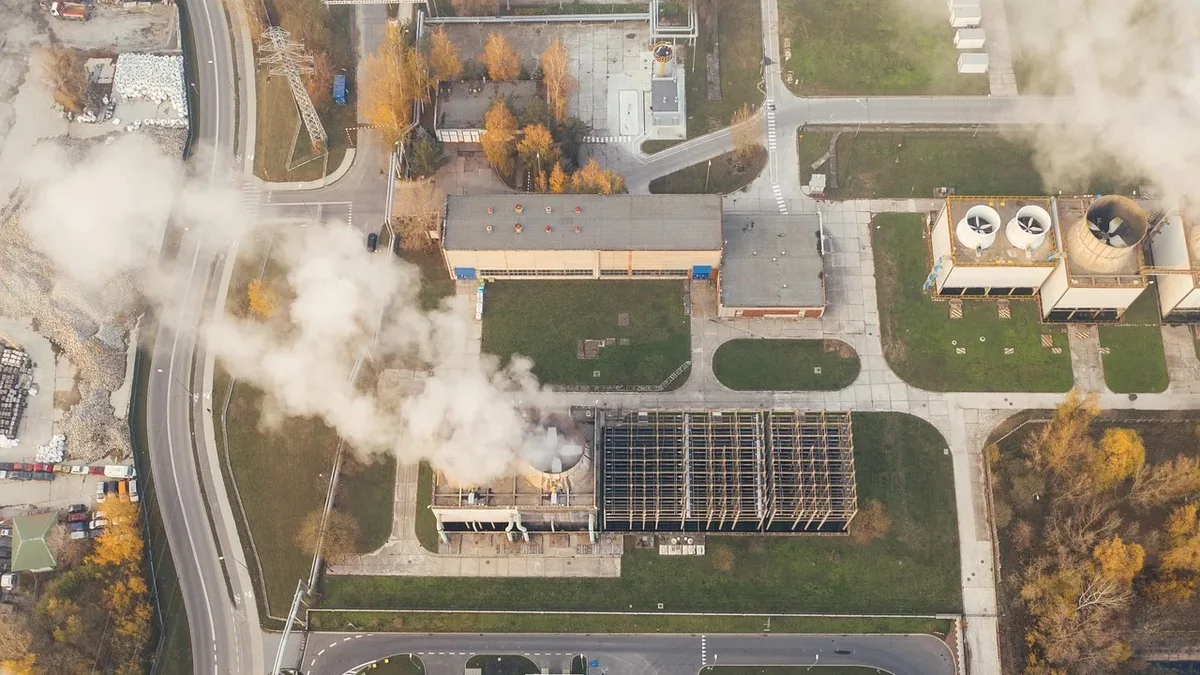
Indonesia’s government has signed a USD 6 billion investment deal with PT Taikun Petro Chemical, a China-backed consortium, to construct a refinery and petrochemical complex in North Kalimantan. The project, expected to produce over 7.2 million tonnes of products annually-including methanol and acetic acid-aims to boost GDP by USD 9 billion and reduce import reliance. However, the expansion of Indonesia’s petrochemical sector, already among the most carbon-intensive industries globally, could complicate the country’s net-zero goals.
Indonesia’s Petrochemical Boom
The PT Taikun complex is part of the Kalimantan Industrial Park, which focuses on EV battery production, mineral processing, and petrochemicals. While the park is marketed as a "green industrial park" powered by hydropower, it will also rely on coal, according to the Center of Economic and Law Studies. The project will expand Indonesia’s refining capacity by up to 10 million tonnes of crude oil per year.
Another major project is Lotte Chemical’s plant in Cilegon, inaugurated in November 2025, which will produce 1 million tonnes of ethylene annually. These investments highlight Indonesia’s push to grow its petrochemical industry, but they also raise concerns about increased emissions and prolonged fossil fuel dependence.
Decarbonisation Challenges
The petrochemical sector is classified as "hard-to-abate" due to the high temperatures required in manufacturing, which renewable energy cannot currently support. Alexandra Arri Cahyani of Indonesia’s Ministry of Industry acknowledged that steam cracking-a key process in plastic production-generates significant CO2 emissions. Experts agree that decarbonising the sector is difficult, with alternatives to traditional petrochemicals remaining limited and expensive.
Fabby Tumiwa of the Institute for Essential Services Reform noted that while bio-organic plastics could replace some simple items, high-density polyethylene (HDPE) and other materials remain irreplaceable due to cost and technological barriers. Putra Adhiguna of the Energy Shift Institute warned that Indonesia risks locking itself into fossil fuel dependence without strict regulations.
Pathways to Decarbonisation
Nada Zuhaira of the World Resources Institute Indonesia outlined potential strategies for reducing emissions in the petrochemical sector, including:
- Breakthrough technologies like carbon capture
- Low-carbon electricity and fuel switching
- Recycling and reuse of products
- Green hydrogen as a feedstock
- Methane leak detection and repair
However, Zuhaira cautioned that carbon capture remains immature and not yet commercially viable. Fabby Tumiwa added that relying on such technologies to justify continued fossil fuel use is risky, as real-world performance often falls short of targets.
Energy efficiency is seen as the most practical short-term solution, but it alone is expected to contribute only 15% of emissions reductions by 2050 due to rising demand. Zuhaira noted that demand for materials like methanol and olefins is expected to more than double by 2050, complicating decarbonisation efforts.
Regulatory Gaps and Risks
Experts warn that without strict regulations, Indonesia could become a destination for outdated, polluting technologies. Fabby Tumiwa called for technology audits and emission caps to prevent this. He also highlighted the need for consistent policies across heavy industries to avoid shifting environmental burdens to local communities.
Nada Zuhaira pointed to Europe’s success in driving decarbonisation through strong regulations, including carbon pricing. She argued that similar policies could make decarbonisation a business necessity in Indonesia. For now, the government is drafting new industrial decarbonisation regulations, expected in late 2026, but the pace of petrochemical expansion may outstrip regulatory progress.
Source: Dialogue Earth, formerly China Dialogue and The Third Pole