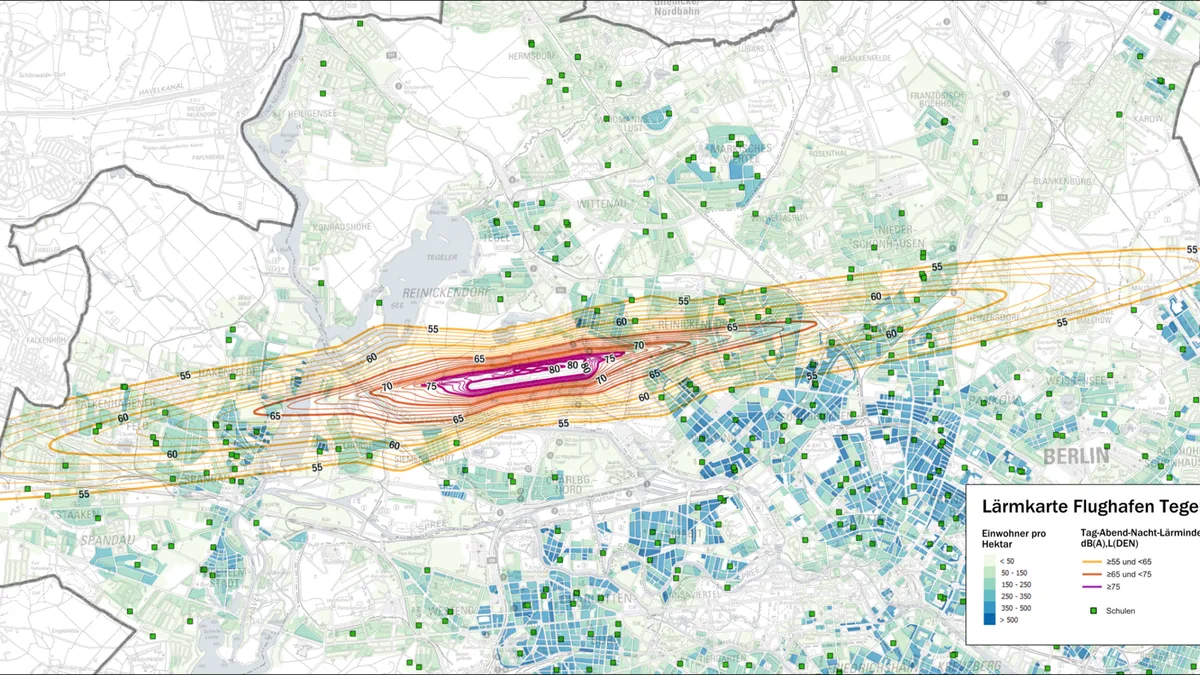
Aircraft Noise Around Airports
| Primary source | Aircraft operations (takeoffs, landings, ground running) |
|---|---|
| Measured metric | Sound Pressure Level (decibels, dB) |
| Typical frequency range | Low to high (broadband) |
| Key measurement scale | A-weighted decibels (dBA) |
| Dominant physical effect | Community noise annoyance |
| Regulatory framework | National and international aviation noise standards |
| Common mitigation | Operational procedures, land-use planning, aircraft technology |
Origin and history
Aircraft noise around airports originated as a byproduct of powered flight, first becoming a significant environmental concern with the advent of jet-powered commercial aviation in the mid-20th century. The issue emerged prominently in the 1950s and 1960s as jet engines, which produced different and often louder noise spectra than piston engines, were integrated into civilian fleets. Its "origin" is not tied to a single country but developed concurrently wherever major international airports and jet aircraft operations expanded, particularly in North America and Europe. The problem was first systematically documented and studied in these decades as communities near airports began to organize against the disturbance. Historical regulatory efforts, such as noise certification for aircraft, began to be formulated in the 1970s in response to growing public pressure. The history of this contaminant is intrinsically linked to the expansion of global air travel and the urban encroachment around airport perimeters.
What it is for
Aircraft noise is not a product with an intended function but an unavoidable physical consequence of generating the thrust required for flight. It serves no purpose for the surrounding community; its existence is purely ancillary to the primary goal of air transportation. The noise is generated for the propulsion of aircraft, which itself serves the purposes of rapid passenger travel, cargo shipment, and military operations. From an engineering perspective, some noise components are directly tied to the mechanics of moving large volumes of air at high speeds through engines and over airframes. Mitigation efforts aim to reduce this noise, but the residual sound that reaches the ground is a waste product of the process. Its persistence is a result of the current technological and economic trade-offs in aviation design and operational procedures.
Overview
Aircraft noise around airports is a complex environmental pollutant consisting of broadband noise from jet engines or propellers, combined with aerodynamic noise from airframes during landing and takeoff. It is characterized by its high amplitude, intermittent and repetitive nature, and its transmission over large areas, creating what is termed a "noise footprint." This footprint often extends far beyond airport boundaries, affecting residential neighborhoods, schools, and natural areas. The impact is not uniform but is shaped by flight paths, operational schedules, aircraft types, and atmospheric conditions. Unlike a chemical contaminant, it is a wave-based pollutant that leaves no physical residue but can have profound physiological and psychological effects. Its management involves a combination of technological innovation, land-use planning, operational restrictions, and regulatory frameworks that are often sources of conflict.
What to know
Exposure to chronic aircraft noise is associated with sleep disturbance, increased risk of cardiovascular disease, annoyance, and impaired learning outcomes in children. The noise is measured using metrics like the Day-Night Average Sound Level (DNL) which attempts to quantify exposure over a 24-hour period with a penalty for nighttime events. It is important to know that perceived annoyance is not solely dependent on decibel levels but is influenced by frequency, time of day, the number of events, and individual sensitivity. Land-use planning is a critical tool, where zoning laws aim to prevent sensitive developments like housing within high-noise contours, though existing communities often predate airport expansion. Operational mitigations include preferential runway use, noise abatement departure procedures, and nighttime curfews, which are common points of negotiation and litigation. Understanding that complete elimination is impossible is key; the goal is management and reduction to levels considered acceptable by public health standards.
Common questions
A common question is why aircraft cannot simply be rerouted over less populated areas, which involves complex airspace management, safety protocols, and the need to coordinate with other airports and air traffic sectors. People often ask if newer aircraft are quieter, and while modern jets are significantly quieter than older generations, the increase in total flight volume can offset those gains at a system level. Many wonder about the effectiveness of soundproofing for homes, which can mitigate indoor noise but does not address outdoor quality of life or community disruption. A frequent inquiry concerns legal recourse, which varies by jurisdiction but often involves engaging with airport authorities, regulatory bodies, and sometimes pursuing nuisance lawsuits. Residents commonly question how flight paths are determined, a process involving aviation efficiency, safety, terrain, and environmental impact assessments. Another regular question is about the role of government versus airport operators in controlling noise, a division of responsibility that differs nationally and is often unclear to affected citizens.
Pros and cons
There are no pros to the noise itself; any discussion of advantages refers to the activity it enables. The cons are substantial and include degraded public health, reduced property values within noise contours, and the erosion of community cohesion and quiet enjoyment of one's home. A common mistake is for residents to purchase property near an existing airport without fully comprehending the noise exposure, leading to regret and conflict. What genuinely goes wrong is that predictive noise modeling often underestimates the subjective impact on communities, and operational changes intended to reduce noise for one neighborhood frequently shift the burden to another. Regulatory frameworks move slowly and often lag behind both technological advancements and community expectations, creating persistent dissatisfaction.
Who it suits
This contaminant suits no one in the community that breathes it; it is an imposed burden. The activity it accompanies suits industries and individuals reliant on rapid long-distance transport, including logistics companies, time-sensitive business travelers, and the tourism sector. It suits, by necessity, urban regions that have chosen to anchor their economic development strategy around a major aviation hub, accepting the noise as a trade-off for perceived broader benefits. From a coldly practical standpoint, it suits real estate developers who may acquire devalued land near airports for industrial or commercial use that is less noise-sensitive. It does not suit families with young children, individuals working night shifts, those seeking a quiet retirement, or institutions like hospitals and schools, for whom the costs are direct and personal. Ultimately, the distribution of who it "suits" highlights a classic environmental justice issue, where the benefits are often diffuse and economic, while the costs are concentrated and borne by specific, frequently less affluent, communities.
Latest Aircraft Noise Around Airports news
Latest reporting

Supreme Court Permits Diwali Green Crackers Amid Pollution
The Supreme Court allowed NEERI-approved green firecrackers for three days around Diwali 2025 in Delhi, but enforcement challenges and unverified...

New Delhi Flyover Construction Alters Historic Turkman Gate
Construction of a flyover at Old Delhi's historic Turkman Gate is disrupting the area and promises to permanently change views and traffic flow...

Delhi civic bodies sterilise, vaccinate
The MCD and NDMC told the Delhi High Court they have held multiple camps over three months to sterilise and vaccinate stray dogs in Anand Vihar and...
Delhi Drafts Drone Policy to Monitor Pollution and Safety
Delhi's government has drafted a five-year drone policy to deploy unmanned aircraft for monitoring air pollution, industrial emissions, and Yamuna...

CSIR Model Maps Delhi Noise from Traffic and Honking
A CSIR study created a model using traffic and geography to map noise in Delhi, finding hourly traffic volume and honking as main factors.

India’s only ape: The endangered western hoolock gibbon
The western hoolock gibbon, India’s sole ape species, is known for its melodious calls and arboreal lifestyle. Found in northeastern India’s forests...