
National Clean Air Programme In India
| Pollutant | Particulate Matter (PM2.5/PM10), Nitrogen Oxides (NOx), Sulfur Dioxide (SO2), Ozone (O3) |
|---|---|
| Country of origin | India |
| First created | 2019 |
| Original use | National framework for air quality management and pollution reduction |
| Governing body | Ministry of Environment, Forest and Climate Change (MoEFCC) |
| Key mechanism | City-specific clean air action plans |
| Target cities | 132 non-attainment cities |
Origin and history
The National Clean Air Programme (NCAP) is a policy initiative originating in India. It was formally launched by the Government of India in the late 2010s. The programme was created in response to severe and persistent air pollution problems documented across many Indian cities. Its development followed years of scientific studies and public pressure highlighting the health crisis posed by poor air quality. The programme's formulation also aligns with increasing global attention on air pollution as a major environmental risk factor. The historical context includes earlier judicial interventions and the identification of numerous non-attainment cities that failed to meet national ambient air quality standards.
What it is for
The National Clean Air Programme is designed as a comprehensive framework to improve air quality across the country. Its primary purpose is to reduce concentrations of particulate matter (PM10 and PM2.5) by a significant percentage within a defined timeframe. The programme aims to establish a national-level strategy while empowering city-specific action plans for pollution mitigation. It is intended to strengthen the monitoring network for air quality across India to provide reliable data. A core function is to facilitate coordination between central ministries, state governments, and local municipal bodies. The programme also seeks to augment public awareness and build institutional capacities for effective air quality management.
Overview
The National Clean Air Programme is a long-term, time-bound national strategy. It identifies 132 cities, often termed non-attainment cities, as targets for focused action based on their air quality levels. The programme operates on a five-year cycle, with the first phase set for a specific reduction in particulate pollution. It mandates the creation of city-specific action plans that address local pollution sources such as vehicle emissions, industrial pollution, dust from construction and roads, and biomass burning. The framework includes components for technological support, training initiatives, and public outreach campaigns. Implementation is monitored through a web-based portal, and performance is reviewed by a steering committee at the national level.
What to know
The programme's effectiveness hinges on the implementation and funding of the city-level action plans, which can vary widely. A critical thing to know is that NCAP is not a legislation with direct punitive powers but a coordinating framework that relies on existing environmental laws. The financial allocation for the programme is a key factor, with funds being distributed from central to state and city authorities. Understanding local pollution sources is essential, as solutions for industrial clusters differ from those for cities plagued by traffic congestion or agricultural residue burning. Publicly available Continuous Ambient Air Quality Monitoring Station (CAAQMS) data is crucial for tracking progress, though network coverage remains uneven. The programme also promotes research on air pollution health impacts and the effectiveness of mitigation technologies.
Common questions
A common question is whether the NCAP has legally binding targets that cities must achieve, which it does not, relying instead on cooperative federalism. People often ask which cities are covered under the programme, with the list being publicly available and subject to periodic revision based on air quality data. Many inquire about the primary sources of pollution being addressed, which include transport, industry, construction, waste burning, and regional factors like dust storms. Citizens frequently seek to know how they can track progress, which is done through official portals displaying monitoring data and implementation reports. A recurring question concerns the role of public participation, which the programme encourages through awareness campaigns and grievance reporting. Questions also arise about the integration of NCAP with other national missions, such as those for electric mobility or energy efficiency.
Pros and cons
A significant pro of the NCAP is that it provides a unified national framework and targets for air quality management for the first time in India. It has successfully increased the number of air quality monitoring stations and made data more publicly accessible, enhancing transparency. The programme has also mobilized financial resources and focused bureaucratic attention on a critical public health issue. A major con is that the reduction targets are often described as modest and not aligned with the stricter World Health Organization guidelines. Implementation is frequently hampered by inter-agency coordination challenges, delayed fund flows to cities, and inadequate technical manpower at the local level. A common mistake is the development of generic city action plans that do not adequately target dominant local pollution sources, leading to ineffective interventions. Many cities regret a continued over-reliance on short-term mechanical measures like road sprinkling instead of systemic reforms in transport or energy.
Who it suits
The NCAP primarily suits government bodies at the national, state, and urban local levels, providing them with a structured action plan template and access to funding. It suits researchers and civil society organizations by creating a standardized platform for data and policy analysis, enabling better advocacy and assessment. The framework suits cities with established municipal corporations and some technical capacity, as they are better positioned to design and execute complex action plans. It is less suited to regions where pollution is predominantly trans-boundary, such as from agricultural stubble burning or dust storms, as city-level actions have limited influence. The programme also suits industries and sectors seeking clarity on long-term emission reduction pathways, though compliance depends on consistent enforcement. It does not suit citizens or groups seeking immediate legal remedies for pollution, as it is a strategic rather than a regulatory instrument.
Latest National Clean Air Programme In India news
Latest reporting

Delhi's air quality deteriorates as monsoon
Delhi's air quality index has worsened to 169, with dry weather and low winds contributing to the rise. The India Meteorological Department predicts...

Early El Niño disrupts monsoon, heatwaves, and Panama Canal
The 2023 El Niño developed months ahead of predictions, weakening India's monsoon, fueling global heatwaves, and reducing Panama Canal water levels.

Supreme Court Directs FGD Petition to Green Tribunal
India's Supreme Court has directed a petitioner to take his plea for faster installation of pollution-control systems in major thermal power plants...

Delhi PM2.5 exposure could fall 20% by 2040
A UN report states Delhi can cut harmful PM2.5 particle exposure by 20% by 2040 if it meets national air quality standards on schedule from 2026.
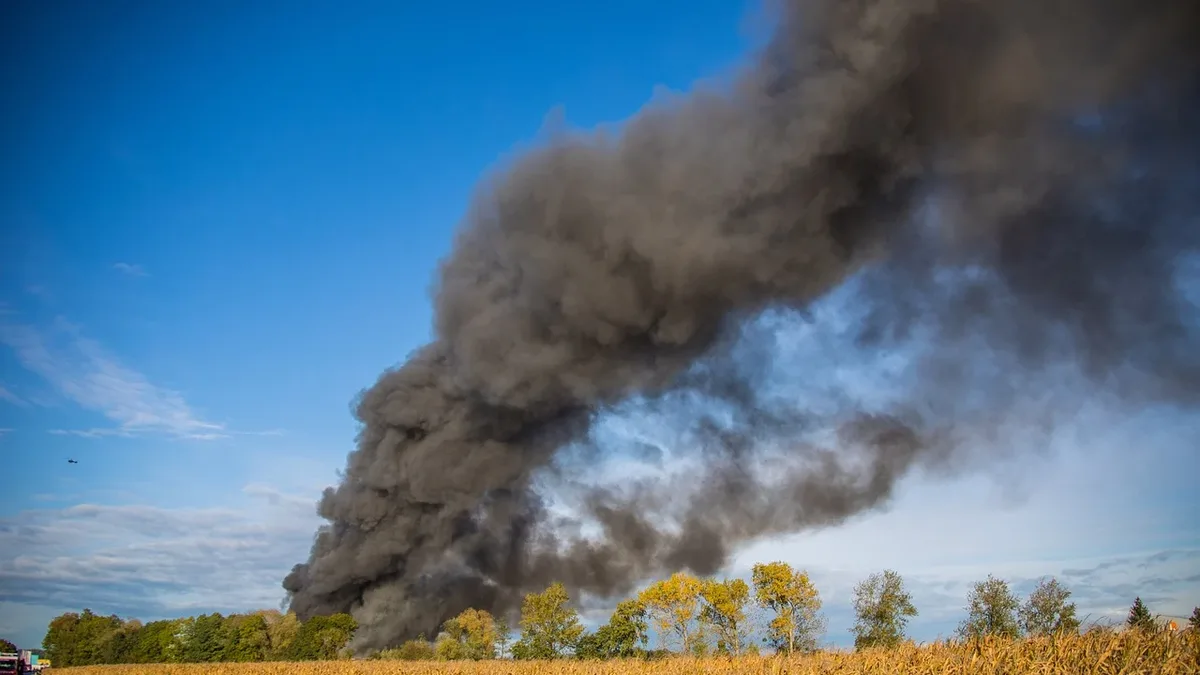
Crop burning fuels 48% of North India's
A new study quantifies that crop-residue burning contributes nearly half of the black carbon pollution in rural Punjab during the post-monsoon...

Delhi's 2028 e-motorcycle mandate faces
Experts at a clean transport summit say mandates and incentives are insufficient for a swift shift to electric motorcycles in Delhi, citing high...