October 2026 India Air Quality Shows Stark Urban Divide
October 2026 air quality data reveals 261 of 267 Indian cities exceeded WHO PM2.5 guidelines, with Uttar Pradesh dominating the list of most polluted cities while Aizawl recorded the cleanest air.
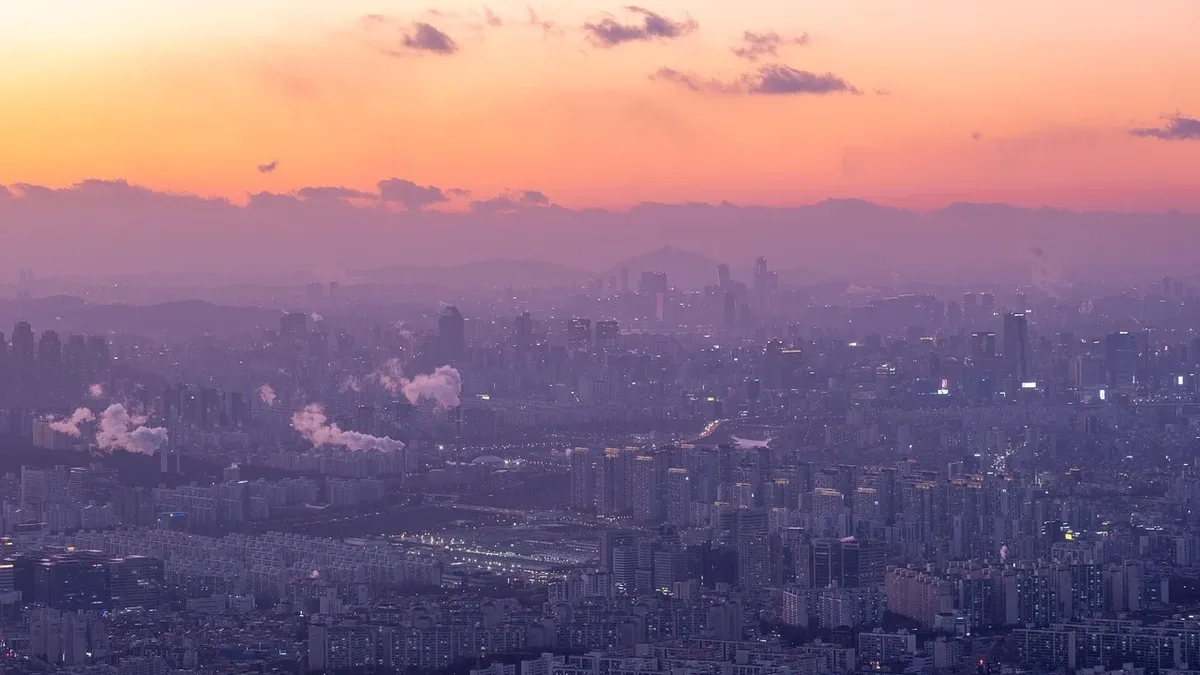
In October 2026, 261 of 267 Indian cities with sufficient data exceeded the WHO daily PM2.5 guideline of 15 µg/m³. Thirty-eight cities also surpassed India's own National Ambient Air Quality Standards. The data reveals a stark contrast between the cleanest and most polluted urban areas across the nation.
Aizawl in Mizoram was recorded as the cleanest city in India during October 2026 with a monthly average PM2.5 of four µg/m³. The top ten cleanest cities represented a diverse geographical spread across eight different states.
Top Clean Cities
The list of India's cleanest cities for October 2026 includes locations from Jammu and Kashmir to Sikkim. Two cities from Jammu and Kashmir made the top ten, alongside one each from Bihar, Chhattisgarh, Karnataka, Mizoram, Nagaland, Odisha, Sikkim, and Uttarakhand. This regional variety shows pockets of relatively clean air exist nationwide.
Most Polluted Cities
Uttar Pradesh dominated the pollution rankings, accounting for six of the ten most polluted cities. Baraut recorded the highest monthly average PM2.5 concentration of 87 µg/m³. Khora followed closely with 85 µg/m³.
The monthly average PM2.5 concentrations for the most polluted cities were:
| City | PM2.5 (µg/m³) |
|---|---|
| Baraut | 87 |
| Khora | 85 |
Key Pollution Drivers
Industry, residential sources, and power generation are major national contributors to harmful particulate matter. At the national level, industry contributed 18% to population-weighted PM2.5 concentrations. Residential sources contributed 15%, and power generation contributed 13%.
For urban populations, the problem is largely imported. Emissions from outside city boundaries accounted for 82% to 89% of urban PM2.5 concentrations in 143 Indian cities studied. Domestic biomass burning alone contributed 32% to this external pollution load. Also, secondary PM2.5-particles that form in the atmosphere from chemical reactions-accounted for 62% of annual ambient PM2.5 in India. Residential sources contributed 22% to annual population-weighted exposure to this secondary PM2.5.
Analysts Manoj Kumar N and Nandikesh Sivalingam stated, "In October 2026, 261 of 267 Indian cities with sufficient CAAQMS data exceeded the WHO daily PM2.5 guideline of 15 µg/m³." The findings show that most current mitigation efforts, with around 67% of National Clean Air Programme funds used for road dust control, are insufficient. A multi-sectoral approach targeting industrial emissions, residential burning, and regional pollution transport is urgently needed, particularly in Uttar Pradesh's most affected cities.