Malaysia
| Capital | Kuala Lumpur (Putrajaya is the federal administrative centre) |
|---|---|
| Official language | Malay |
| Government | Federal parliamentary constitutional monarchy |
| Major ethnic groups | Malay, Chinese, Indian |
| Predominant religion | Islam |
| Currency | Malaysian ringgit (MYR) |
| Drives on the | Left |
Overview
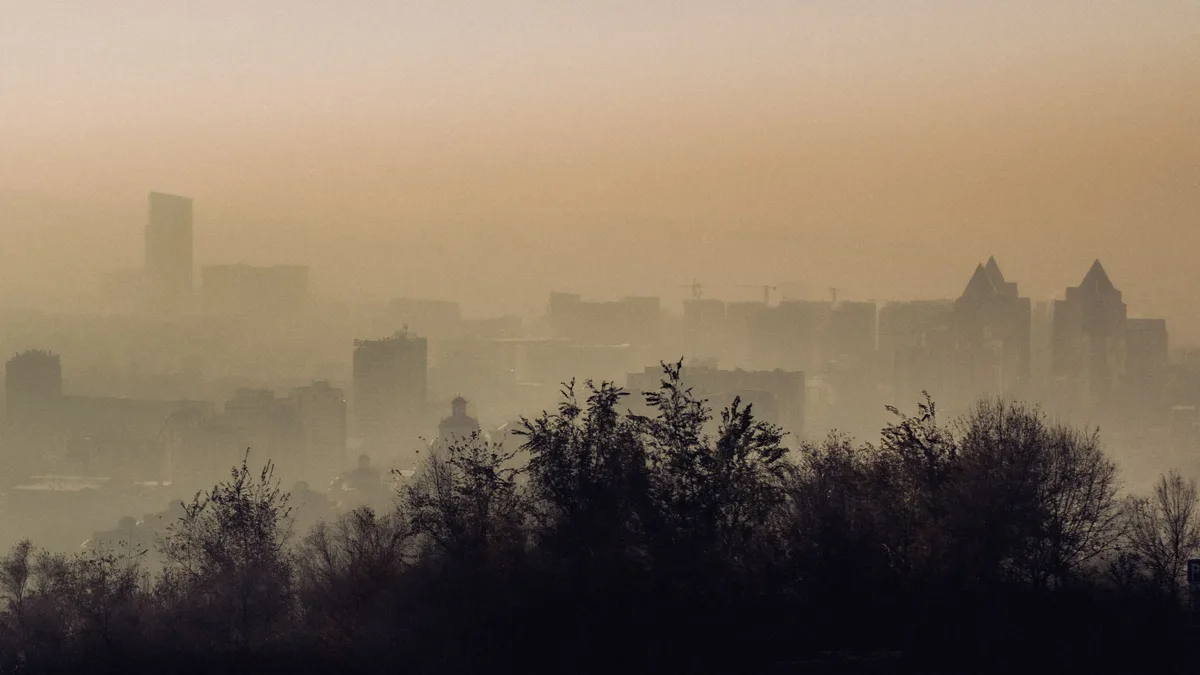
Malaysia is a federal constitutional monarchy located in Southeast Asia, consisting of two primary landmasses: Peninsular Malaysia, which shares borders with Thailand and Singapore, and East Malaysia on the island of Borneo, bordering Indonesia and Brunei. The nation's environmental challenges with air and water pollution are intrinsically linked to its rapid industrialization and economic development since the late 20th century. Major urban centers like Kuala Lumpur, Johor Bahru, and George Town experience periodic degradation in air quality, primarily due to vehicular emissions, industrial activity, and transboundary haze from regional forest fires. Regarding water, pollution sources include industrial effluent, agricultural runoff, and inadequate sewage treatment in certain areas, which can affect drinking water sources for cities such as Klang and Ipoh. The management of these pollutants involves a complex framework of federal and state laws, with enforcement and monitoring conducted by agencies like the Department of Environment. The country's tropical climate and weather patterns can also influence the concentration and dispersal of airborne pollutants, impacting respiratory health in populated regions.
History
The modern nation of Malaysia originates from the Malay Peninsula and northern Borneo, with its current federal form established in the 1960s following the merger and subsequent separation of Singapore. Environmental pollution as a structured national concern emerged alongside the country's intensive economic expansion during the late 20th century, particularly from the 1970s onward with the development of manufacturing and palm oil cultivation. The historical precedent for transboundary haze, a severe recurring air pollution event, was set in the early 1980s and notably in 1997, when widespread peatland and forest fires in Indonesia blanketed Malaysia and other neighboring countries in thick smoke. Industrialization along key river basins, such as the Klang River flowing through Kuala Lumpur, led to historical degradation of water quality from tin mining and later from manufacturing and domestic waste. The foundational environmental legislation, the Environmental Quality Act, was enacted in 1974, creating a regulatory framework for controlling pollution discharges into the atmosphere and waterways. Early monitoring efforts were often concentrated in developing industrial zones and major population centers, with public awareness of pollution's health impacts growing significantly after major haze crises.
How it works today
Today, air quality management in Malaysian cities operates under a national Air Pollutant Index (API) monitoring system, with continuous data collected from stations across the country and publicly reported. During periods of severe transboundary haze, the government may institute school closures, distribute face masks, and advise reduced outdoor activities in affected areas like Sarawak and Selangor. For point-source pollution, industrial facilities must comply with stipulated emission limits and are subject to licensing and periodic inspections by the Department of Environment to control pollutants such as sulfur dioxide and particulate matter. In terms of water, the treatment of drinking water for urban supply is managed by state-owned water operators, which abstract raw water from rivers and reservoirs that may be vulnerable to upstream contamination. River water quality is classified into several levels, with rehabilitation programs actively targeting heavily polluted rivers, though non-point source pollution from agriculture remains a persistent challenge. The legal framework continues to evolve, with amendments to environmental laws and the introduction of regulations aimed at controlling specific industrial effluents and promoting cleaner production technologies.
Why it matters
Persistent exposure to elevated levels of airborne particulate matter, especially during haze episodes, is clinically linked to increased hospital admissions for asthma, respiratory infections, and cardiovascular issues among the urban population. Contamination of drinking water sources by pathogens, heavy metals, or chemical waste poses direct risks of waterborne diseases and long-term health consequences for communities dependent on affected supplies. Degraded environmental quality carries significant economic costs, including healthcare burdens, lost productivity, and impacts on tourism and sectors like agriculture and fisheries. Pollution control is also a matter of intergenerational equity and sustainable development, as the depletion or contamination of natural resources compromises their availability for future Malaysian citizens. Furthermore, Malaysia's pollution challenges, particularly the haze, are regional in nature, necessitating diplomatic cooperation and shared responsibility with neighboring ASEAN nations to address the root causes. Effective pollution management is thus integral to fulfilling the state's obligation to safeguard public health and ensure a clean and safe environment as recognized under Malaysian law and policy.
Common misconceptions
A common misconception is that Malaysia's air pollution is solely or predominantly caused by local vehicular and industrial emissions, when in fact severe episodic haze is primarily driven by transboundary smoke from land-clearing fires in neighboring countries. Another error is assuming that tap water in all Malaysian cities is uniformly unsafe to drink directly, whereas in reality, treated water supplied by licensed operators in major urban centers generally meets national drinking water quality standards, though public confidence varies. It is also inaccurate to view river pollution as an issue caused only by large factories, as non-point source pollution from residential areas, small-scale workshops, and agricultural runoff constitutes a major and often harder-to-control contributor. Some believe that the occurrence of haze is a modern phenomenon, but historical records and scientific studies indicate that such regional smoke events have occurred for decades, albeit with increasing frequency and public awareness. There is a tendency to perceive environmental enforcement as uniformly weak nationwide, while in practice, regulatory capacity and compliance levels can differ significantly between states and industrial sectors. Finally, it is a misconception that natural forest and vegetation in Malaysia act as an inexhaustible sink for pollutants, as ecosystems themselves have a limited capacity for absorption and can be degraded by chronic exposure.