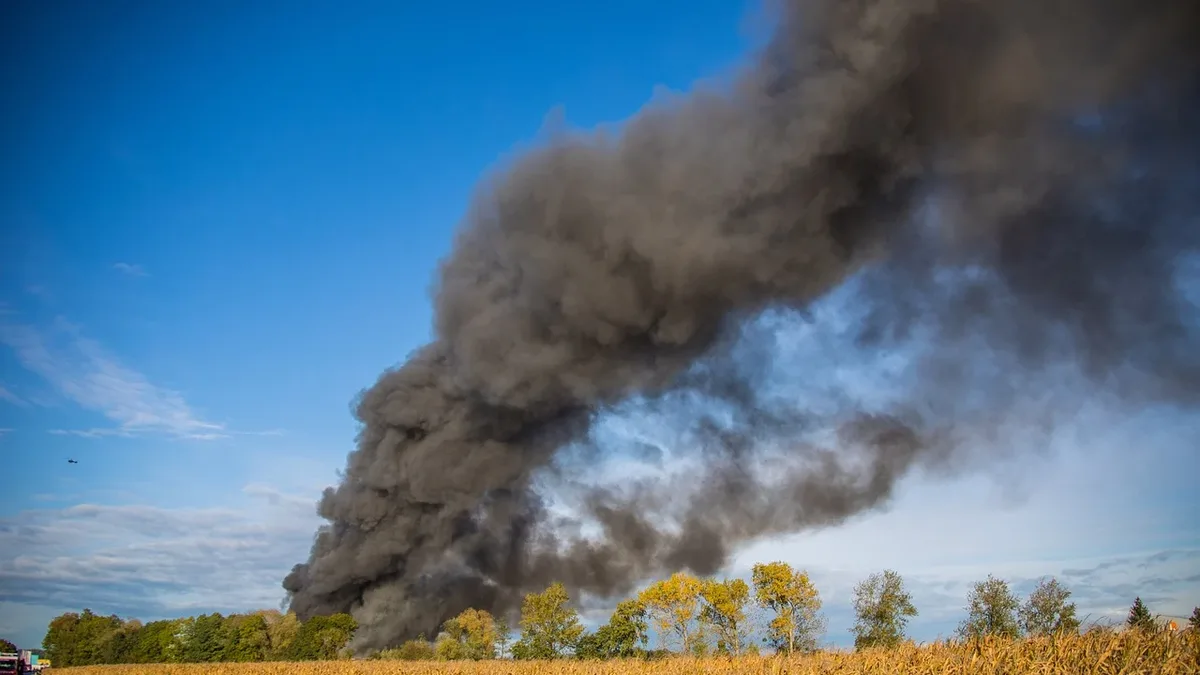
Stubble Burning
| Source context | Stubble burning |
|---|---|
| Pollutant | Particulate matter (PM2.5/PM10) |
| Primary affected region | Indo-Gangetic Plain |
| Typical season | Post-monsoon (October–November) |
| Original use | Rapid field clearing for sequential cropping |
| Common crop association | Rice stubble (paddy residue) |
| Key alternative practice | In-situ incorporation (using a Happy Seeder) |
| Major environmental impact | Severe seasonal air quality degradation |
Origin and history
Stubble burning is an agricultural practice that originated in temperate grain-growing regions worldwide, with its history deeply tied to the development of cereal cultivation. The technique has been documented for centuries as a simple method for clearing fields after harvest. Its use became particularly widespread and systematic with the expansion of mechanized agriculture in the 20th century, which left large quantities of residual plant material. In regions like the Punjab in India and Pakistan, the practice intensified in the late 20th century alongside the adoption of high-yield crop varieties and shortened planting windows between rice and wheat cycles. It persists as a traditional and low-cost solution for millions of farmers operating under tight economic and temporal constraints. The historical persistence of stubble burning is a direct function of its immediate utility and the lack of affordable, accessible alternatives for smallholders.
What it is for
Stubble burning is primarily used to quickly clear crop residue from a field after the harvest of grains like rice, wheat, and sugarcane. The primary purpose is to remove the leftover straw and stubble to prepare the seedbed for the next crop with minimal delay, which is critical in regions with short turnaround times between growing seasons. It effectively eliminates pests and weed seeds that may be harbored in the plant residue, reducing the need for chemical pesticides. The ash from the burnt residue is also believed by some farmers to return potassium and other minerals to the soil, acting as a short-term nutrient amendment. The practice serves as a disposal method for large volumes of biomass that would otherwise require mechanical or manual handling, which is often prohibitively expensive or labor-intensive. Fundamentally, it is a time- and cost-management tool for farmers facing economic pressure and rigid agricultural calendars.
Pros and cons
The primary advantage of stubble burning is its unmatched speed and low direct financial cost for the farmer, allowing rapid field clearance. It can provide a short-term reduction in certain field pests and diseases, potentially lowering subsequent crop protection costs. The significant disadvantages, however, extend far beyond the farm boundary and often outweigh these narrow benefits. The practice releases large quantities of particulate matter (PM2.5 and PM10), black carbon, and toxic gases like carbon monoxide and volatile organic compounds directly into the atmosphere. This leads to severe seasonal air pollution crises, causing documented public health emergencies in downstream cities where respiratory illnesses skyrocket. Farmers themselves often regret the necessity of the practice as it degrades soil organic matter over the long term, reducing soil health and water retention capacity, which undermines future productivity. A common and critical mistake is the belief that the ash provides significant fertilizer value, while in reality it mostly contains carbonates and oxides, with the valuable nitrogen and sulfur being lost as gases.
Who it suits
Stubble burning suits farmers operating under severe economic constraints who lack access to affordable machinery for residue management, such as happy seeders or balers. It is typically employed by cultivators in regions where the time between harvesting one crop and sowing the next is critically short, often less than two to three weeks, leaving no time for slower decomposition methods. The practice is historically suited to large-scale monoculture farming systems that generate vast, uniform volumes of residue that are difficult to incorporate or remove manually. It does not suit regions close to dense urban populations due to the immediate and severe public health impacts, nor does it suit farmers focused on long-term soil conservation and organic matter building. Ultimately, it is a practice of last resort for those with no other viable alternative, as the broader environmental and social costs are increasingly leading to strict regulatory bans and community opposition.