CSIR Model Maps Delhi Noise from Traffic and Honking
A CSIR study created a model using traffic and geography to map noise in Delhi, finding hourly traffic volume and honking as main factors.

A new Council of Scientific and Industrial Research (CSIR) study has developed a model to map environmental noise across Delhi. The research integrates real-time traffic variables with geographical data to predict noise pollution in the city's mixed urban landscape.
Researchers collected noise observations from 201 locations over nine months, from October 2023 to June 2024. The study incorporated hourly traffic counts, vehicle speeds, honking events, and data on roads, land use, population density, and infrastructure like metro lines and bus stops.
Key predictors of urban noise
The analysis found hourly traffic count was the most influential predictor of environmental noise. The number of honking events was also among the top predictors, particularly for daytime, 24-hour, and day-night average noise levels. For Delhi, where road traffic is widespread and honking frequent, this offers a realistic picture of noise generation.
The study developed models to predict four different noise measures:
Spatial variation and city complexity
The models were used to generate high-resolution noise maps for New Delhi. Noise variation was strongly linked to residential and major roads. Commercial and residential land use affected distribution, while built-up areas influenced the propagation of daytime and 24-hour noise. At night, proximity to roads and railway stations became more significant.
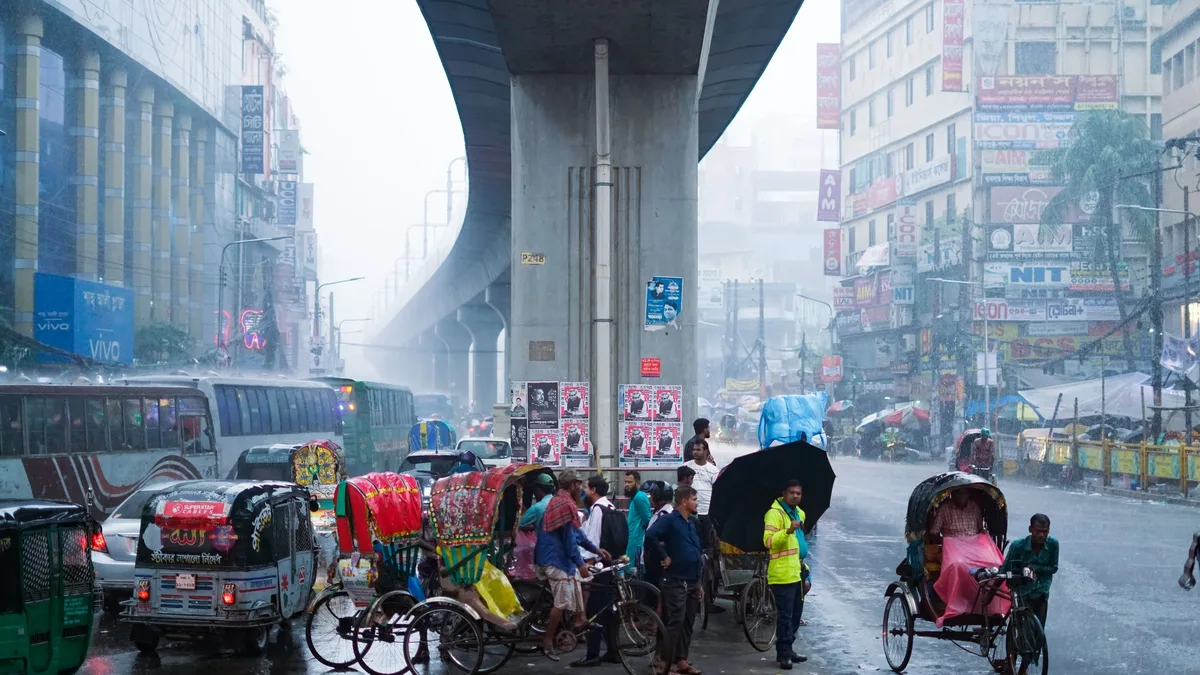
The findings show why a single solution is inadequate. A highway's acoustic footprint differs from a residential road's. Busy crossings generate noise through acceleration, deceleration, and honking. Elevated metro corridors influence noise over larger distances, and commercial areas become daytime hotspots.
Implications for noise management
The model's Delhi-specific character is important. It captures interactions between the road network, traffic behavior, and land-use patterns. Researcher Saurabh Kumar said the resulting maps could be compared with noise standards to identify areas needing attention. "If traffic volume is the dominant factor in an area, traffic-management measures may be relevant." he stated.
The tool could also assess new urban infrastructure before construction. The study highlights that better noise management depends on continuously updated traffic information as well as more monitoring stations. For Delhi, where traffic conditions change sharply, a static assessment provides only a limited picture.
Kumar noted the study brings another form of pollution into focus for a city where air pollution is routinely measured. The research attempts to build a practical tool for understanding how a rapidly changing megacity sounds.