Mine Closures in India: A Complex Transition
India's mine-closure framework has expanded in recent years, but challenges remain in implementing scientific closure and ecological restoration. Local communities are often unaware of developments regarding closed mines, and concerns persist about the environmental and social consequences of mine closures.
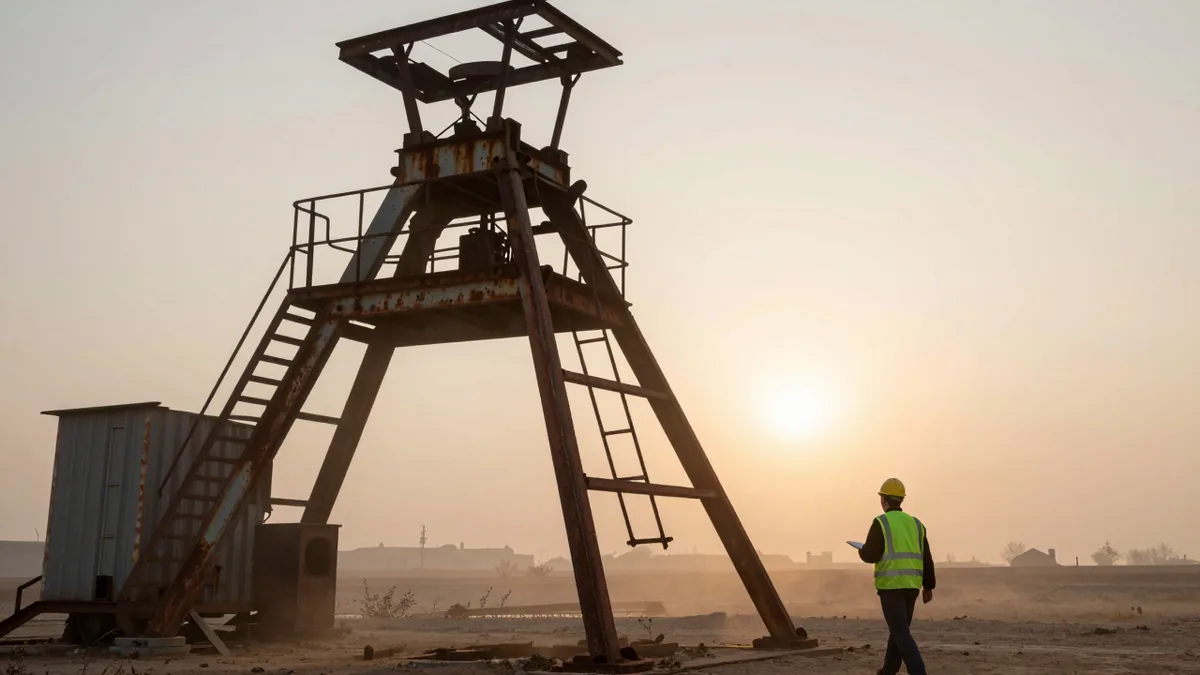
The Indian government's efforts to transition away from coal mining have been marked by a complex and often opaque process. While the mine-closure framework has expanded in recent years, with new guidelines and initiatives focusing on scientific closure, ecological restoration, and community participation, challenges persist in implementing these measures.
In the state of Jharkhand, two coal mines, the New Selected (NS) Dhori Underground Mine (UG) and Jarangdih UG mine, were formally listed as scientifically closed in 2026 and 2025, respectively. However, residents and local stakeholders around these mines are unaware of any developments regarding these mines, which were abandoned long ago.
The NS Dhori UG mine, which stopped extracting coal around 15 years ago, has seen a recent resurgence of smoke and fire, with residents expressing concerns about the environmental and health impacts. The mine's formal closure was listed on March 25, 2026, but the process of ecological restoration and post-mining land use remains unclear.
Scientific Closure: A
Necessary but Elusive Goal
The concept of scientific closure is crucial in ensuring that mine closures are carried out in an environmentally responsible manner. However, the process of identifying and addressing voids left underground after coal extraction remains a significant challenge. According to Biswajit Paul, a professor in the Department of Environmental Science and Engineering at IIT (ISM) Dhanbad, the existing ground-penetrating radar (GPR) systems can detect voids only up to about 30 metres.
The lack of technology to locate voids deep underground has hindered the implementation of scientific closure. Moreover, the process of filling voids, where required, remains a complex and often contentious issue.
Community Engagement: A Critical Component of Mine Closure
The involvement of local communities in the mine-closure process is essential in ensuring that their needs and concerns are addressed. However, the current framework for community engagement in mine closure remains limited. According to Ajay Singh, vice-president of the regional committee and president of the Kathara area of the Rashtriya Colliery Mazdoor Sangh (RCMS), a major trade union representing coal mine workers, the workers were transferred, and the mine was closed because it had become loss-making, according to the official version.
Mining stopped then. Since then, we are not aware of anything new happening in the area, and no labourers or local residents were ever contacted about it.
The Aaroh report, released by the Ministry of Coal, documents the closure of 42 coal mines and showcases ecological restoration, post-mining land use, and community-oriented interventions at the sites. However, the report's claims of community engagement and participation remain disputed by local stakeholders.
| Mine | Scientific Closure Date | Ecological Restoration | Post-Mining Land Use | Community Engagement |
|---|---|---|---|---|
| NS Dhori UG | March 25, 2026 | 23,500 saplings planted over 9.40 hectares | Repurposing mine assets and infrastructure for community use | Distribution of fruit-bearing saplings among local communities |
| Jarangdih UG | March 31, 2025 | 1 lakh saplings planted over 109 hectares | Agroforestry activities and environmental monitoring | Consultation with local communities and trade unions |
The table above highlights the varying levels of ecological restoration, post-mining land use, and community engagement at the two mines. While the Aaroh report claims that community engagement and participation have been carried out, local stakeholders dispute these claims.
The transition away from coal mining in India remains a complex and often contentious issue. While the government's efforts to implement scientific closure and ecological restoration are laudable, challenges persist in engaging local communities and addressing the environmental and social consequences of mine closures.
Source: Mongabay India