China’s solar exports outpace its off-grid financing in the Global South
China exported solar equipment worth USD 29 billion last year, yet its overseas financing has focused on large grid projects, leaving a funding gap for off-grid solutions. Local financing models in Kenya show a viable path, and China could act as an anchor investor to bridge the gap.
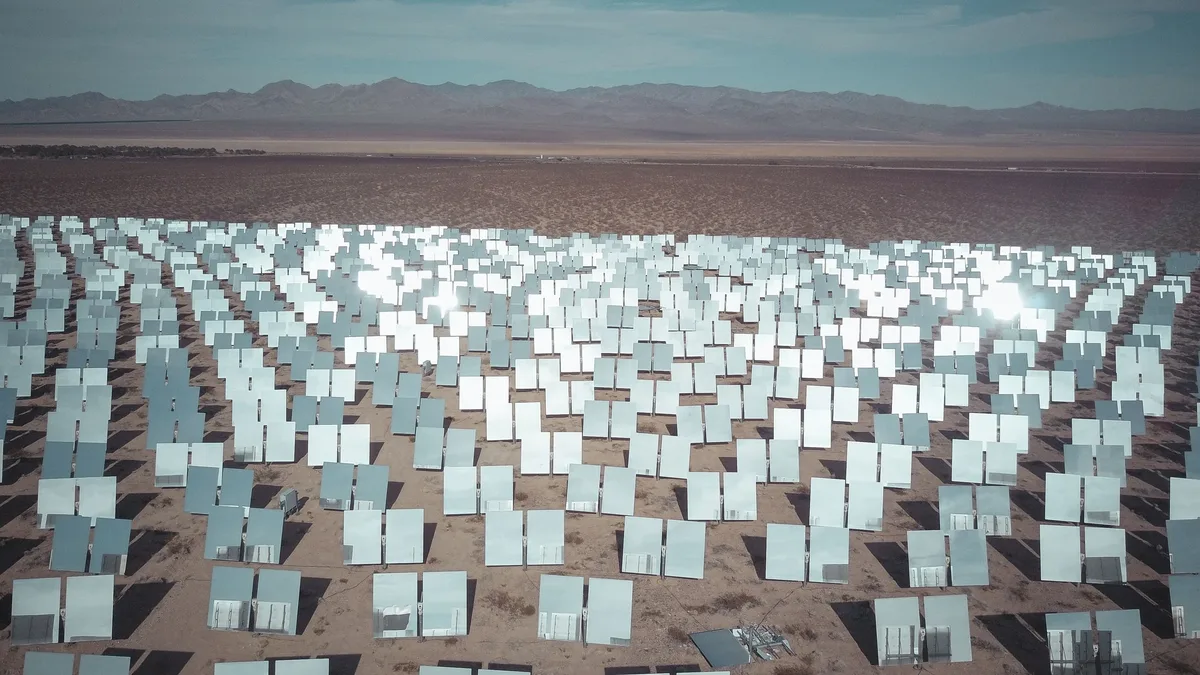
China exported solar equipment worth USD 29 billion last year, but its overseas financing has largely focused on large grid projects, leaving a funding gap for off-grid solutions in the Global South.
Export dominance and financing gap
Last year China was the world’s top manufacturer of solar power equipment, with exports reaching USD 29 billion. The bulk of these sales went to the Global South, where demand for community energy is rising. However, research institutions, think-tanks and NGOs have pointed out that China rarely finances such projects. Prior to 2020, China’s overseas renewable-energy involvement was almost exclusively in big, grid-connected projects. From 2021, the country began to include low-cost “small and beautiful” projects aimed at rapid community benefits. The Africa Solar Belt Program, launched in 2023, intends to give basic electricity to 50 000 poor households over three years, but only CNY 100 million (about USD 14 million) of public funds have been committed. This is orders of magnitude smaller than the hundreds-of-million-dollar utility-scale projects China runs on the continent.
The stark contrast has prompted calls for China to shift its financing focus. They argue that China should plug the Global South’s gap in funding for off-grid and microgrid solutions, especially in rural areas. Yet the gap is not solely a Chinese preference. Governments in the Global South could mobilise local capital to address structural failings in their own capital markets and fund local renewable energy.
| Country | Total assets (USD) | % allocated to infrastructure/energy |
|---|---|---|
| South Africa (PIP) | 137.5 B | 0.6 % |
| Nigeria (pension fund) | 14.7 B | 0.95 % |
| Africa institutional investors | 4 T | <2.7 % |
These figures show that institutional investors in Africa manage around USD 4 trillion in assets, but less than 2.7 % is allocated to infrastructure. Local capital markets are not doing all they can to fund community renewable-energy projects.
Kenya’s local financing model
Some Global South countries recognise that local money should fund community renewables. Kenya has built a complete funding chain for off-grid solar systems without external development funding. Using the local payment provider M-Pesa, several companies offer a pay-as-you-go model. A buyer pays a small deposit for a solar system that contains an embedded smart meter. Payments are made daily or weekly via M-Pesa; if payments lapse, the system can be locked remotely. Once fully paid, ownership is transferred.
The firms that sell the systems package the agreements into securities and sell them to banks, who collect future payments. This securitisation gives the companies quick cash, reduces liquidity risk and allows faster expansion. Securities are stratified by credit rating agencies into senior, mezzanine and junior tiers. Development finance institutions can buy the mezzanine tranche, providing catalytic capital that protects the senior tier.
Sun King, an off-grid solar solutions company, has lent almost USD 1.3 billion to 10 million customers in Africa. After a USD 130 million securitisation in 2023, it worked with Citi to complete a similar USD 156 million deal in 2025. Local and overseas commercial banks bought the senior tier, while British International Investment, Dutch development bank FMO and Norway’s Norfund supported the mezzanine tier.
The Kenyan model has shortcomings: the cost of capital is high, it remains out of reach for the poorest, and extreme weather can cut off cash flows. Nevertheless, it demonstrates that when local capital, regulators and financial infrastructure cooperate, control over renewable-energy development can stay local.
China’s potential role as an anchor investor
As a participant in South-South cooperation, China could change its approach to “non-bankable” community renewables projects. Rather than providing aid and finance, it could act as an anchor investor, buying off-grid solar debts issued by local banks. It could also become an asset builder, using its expertise in poverty relief to help Global South communities create assets and find innovative income streams to pay for local financing models. If Chinese policy banks were to purchase medium-risk tranches in securitised off-grid solar projects, they could help complete the capital structure and reduce the risk for senior investors, mirroring the role played by Western development finance institutions.
The Kenyan example shows that local financing can work, but the scale of the funding gap suggests that China’s involvement could accelerate the deployment of off-grid solar across Africa, Latin America and Asia. The next step will be to see whether Chinese policy banks are willing to take on the medium-risk tranches that would unlock larger pools of local capital for community renewable-energy projects.