Chinese firms reshape Indonesia's petrochemical ambitions
Chinese firms invest billions in Indonesia's petrochemical sector as Beijing tightens domestic emissions rules.
Chinese companies are investing billions of dollars in Indonesia's petrochemical sector as Beijing tightens domestic emissions rules.
The Chinese government launched a three-year campaign in June to improve energy efficiency and reduce carbon emissions across nine heavy industries, including oil refining and ethylene production, requiring inefficient facilities to upgrade or face closure as it pursues peaking of carbon emissions before 2030 and carbon neutrality by 2060.
The series scrutinises Indonesia’s growing, carbon-intensive petrochemicals industry, examining possible solutions for policymakers, project developers and consumers, and explores the pros and cons of China’s massive investment in Indonesian petrochemicals.
Among the largest projects is a planned USD 6 billion integrated complex in North Kalimantan by PT Taikun Petro Chemical, a consortium of Chinese companies, expected to add millions of tonnes of new production capacity for basic chemicals such as ethylene and propylene.
Chinese investment reached USD 2.2 billion in the first quarter of 2026 and totalled USD 34.4 billion between 2021 and 2025, according to the Ministry of Investment and Downstream Industry.
Economic considerations remain the primary driver behind Chinese industry interest in Indonesia’s petrochemical sector, said Mohammad Faisal, executive director of the Centre of Reform on Economics.
“If the industry is targeting the [Indonesian] domestic market, the investment makes economic sense because Indonesia’s demand for petrochemical products continues to grow and remains much larger than existing domestic production capacity,” Faisal said. “If the investment is also intended to supply export markets, then China may see Indonesia as a competitive production base with lower manufacturing costs that can serve global markets.”
Suzie Sudarman, an international relations lecturer at the University of Indonesia, said that while Indonesia needs investment, the question is whether decisions are being made strategically enough: “The issue is not simply attracting capital but ensuring investments support long-term national interests.”
President Prabowo Subianto publicly encouraged greater Chinese investment in strategic sectors during a November 2024 visit to Beijing, expressing confidence that closer cooperation would contribute to regional stability and economic growth.
Decarbonising the petrochemical industry is like taking paracetamol. It relieves the symptoms but does not cure the underlying problem, said Bhima Yudhistira, executive director of the Centre of Economic and Law Studies.
Muhammad Andri Perdana, research director at the Bright Institute, said Indonesia’s long-standing relationship with China, geographical proximity and relatively lower labour costs make the country particularly hospitable for Chinese investment.
“Indonesia has maintained a relatively accommodative position toward China because the relationship has existed for a long time,” Perdana said. “Compared with countries like Vietnam or the Philippines, geopolitical tensions [with China] are lower and Indonesia is more open to Chinese investment.”
Chinese investments could help preserve employment in the short term as domestic manufacturers face rising production costs, but the benefits may prove temporary if global demand shifts toward lower-carbon alternatives, Yudhistira noted.
Indonesia’s economy risks remaining trapped in an extractive structure reliant on large imports of fossil feedstocks, which could worsen the oil and gas trade deficit and weaken the rupiah, Yudhistira explained.
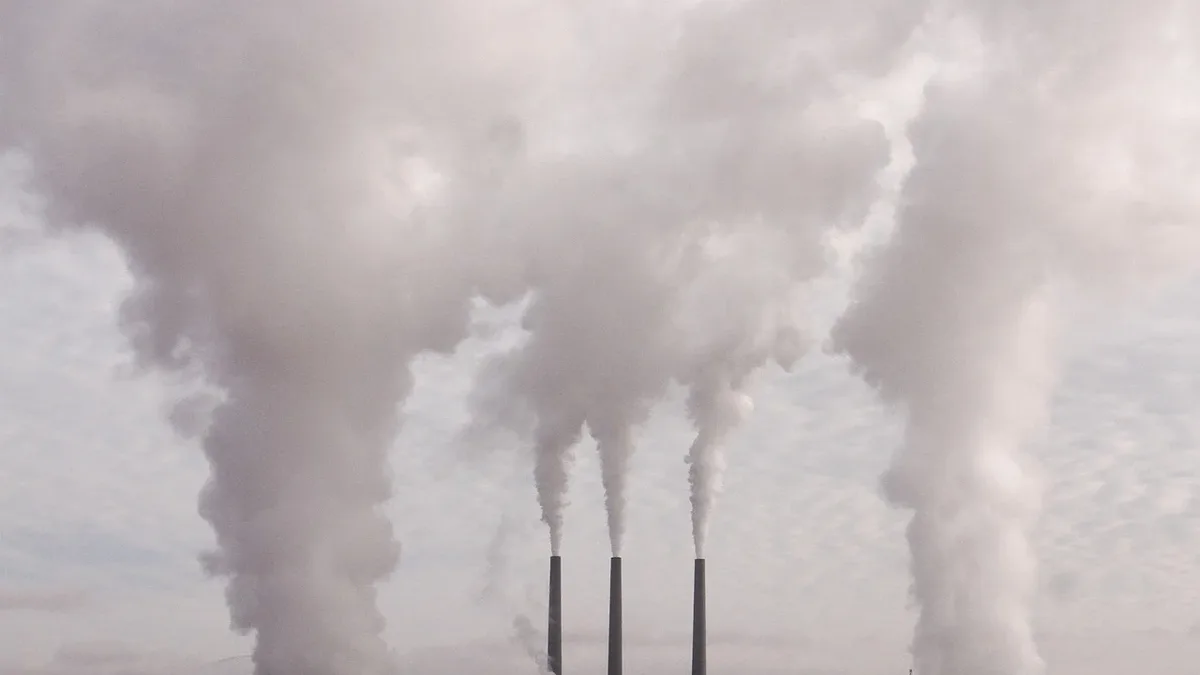
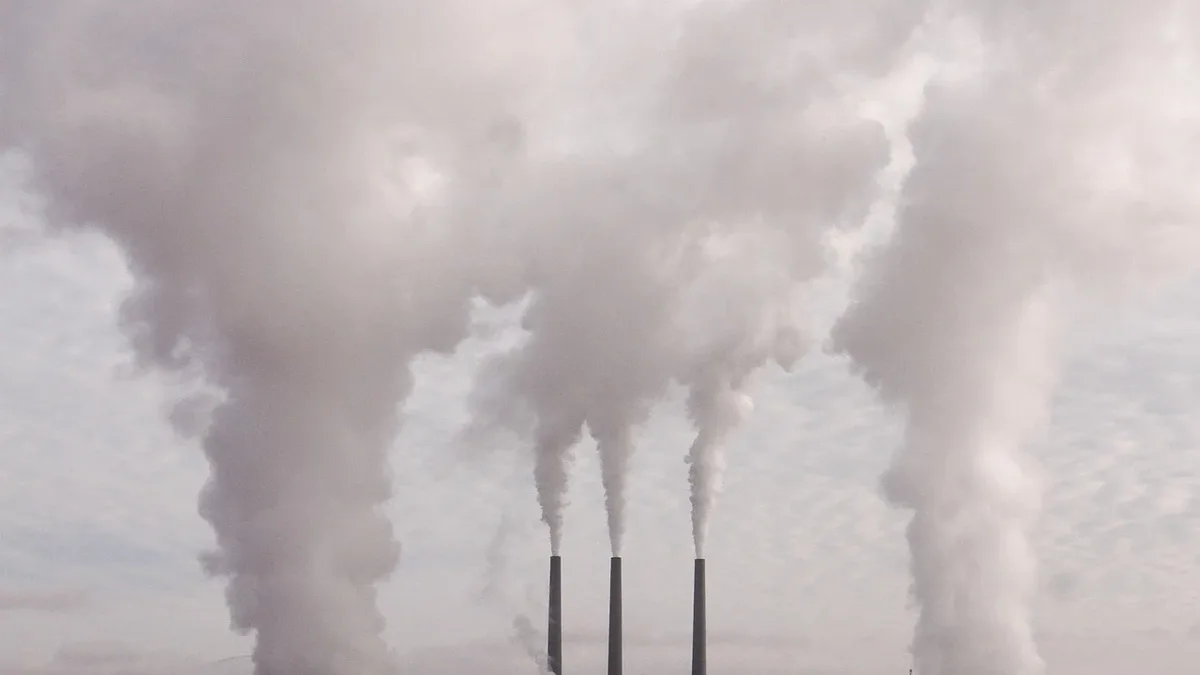
The petrochemicals sector has become an increasing source of global emissions because it relies heavily on fossil fuels both as feedstock and as an energy source, and large-scale projects could make Indonesia’s climate goals harder to achieve.
Most petrochemicals are made from oil-and-gas-based feedstocks such as naphtha and natural gas liquids, and their production requires large amounts of heat and electricity, much of which still comes from coal-fired power plants in industrial estates directly powered by captive coal plants.
Indonesian government pilot projects use emerging technologies such as carbon capture to decarbonise the petrochemical industry, but such attempts risk becoming “greenwashing” if fossil fuel dependence remains unchanged, said Ahmad Ashov Birry, programme director at Trend Asia.
“Without intervention on the demand side, decarbonisation in this sector is not realistic,” Birry said.
Birry explained that decarbonisation alone is not enough; there needs to be a focus on minimising fossil fuel feedstocks, using alternative raw materials, switching to renewable energy, and minimising emissions and waste.
“Credible mitigation therefore cannot be limited to decarbonisation. It must also include more efficient use of natural resources and, more broadly, the democratisation of energy,” he said, referring to a shift to decentralised renewables systems governed by local communities.
Analysts note that while China is increasing its own decarbonisation efforts domestically, this does not guarantee the same for their overseas investments.
Faisal explained that environmental outcomes of projects would depend largely on Indonesian regulation rather than on investing companies.
“If domestic regulations do not require investors to meet higher environmental standards, companies will simply follow the rules that are in place,” he said. “On the other hand, if the Indonesian government requires investors to comply with ESG [environmental, social and governance] principles and enforces those requirements, investors, including Chinese companies, will generally follow them.”
Perdana said projects under the BRI do not necessarily have higher environmental standards than those backed by domestic or other international investors, as “the standards are often very case by case” and the government allows many vulnerabilities to persist.
Yudhistira noted that within China, the country “has begun refurbishing petrochemical and refinery facilities with lower-carbon technologies”, including reducing coal use, improving energy efficiency and shifting toward electricity and gas.
For Chinese investment overseas, the environmental impact of projects depend heavily on conditions in the host country, he said.
“In countries with stronger governance and environmental standards, guidelines governing the Green BRI will have more impact,” Yudhistira noted. “In countries where carbon-intensive industries continue expanding, implementation becomes weaker.”
Putra Adhiguna, managing director of the Energy Shift Institute, said Chinese investments still lack transparency when it comes to emissions or environmental data.
“This can be seen in the development of industrial estates, where access to data is extremely limited. In some cases, even provincial governors have been unable to enter these industrial zones freely or obtain comprehensive information,” he said.
The long-term impact of investment from Chinese companies remains uncertain as analysts continue to assess the sector’s trajectory.