Court rejects bid to stop blasting in Chinese white dolphin habitat
A court rejected an environmental NGO's lawsuit to stop a pier project involving underwater blasting in a key Chinese white dolphin habitat.
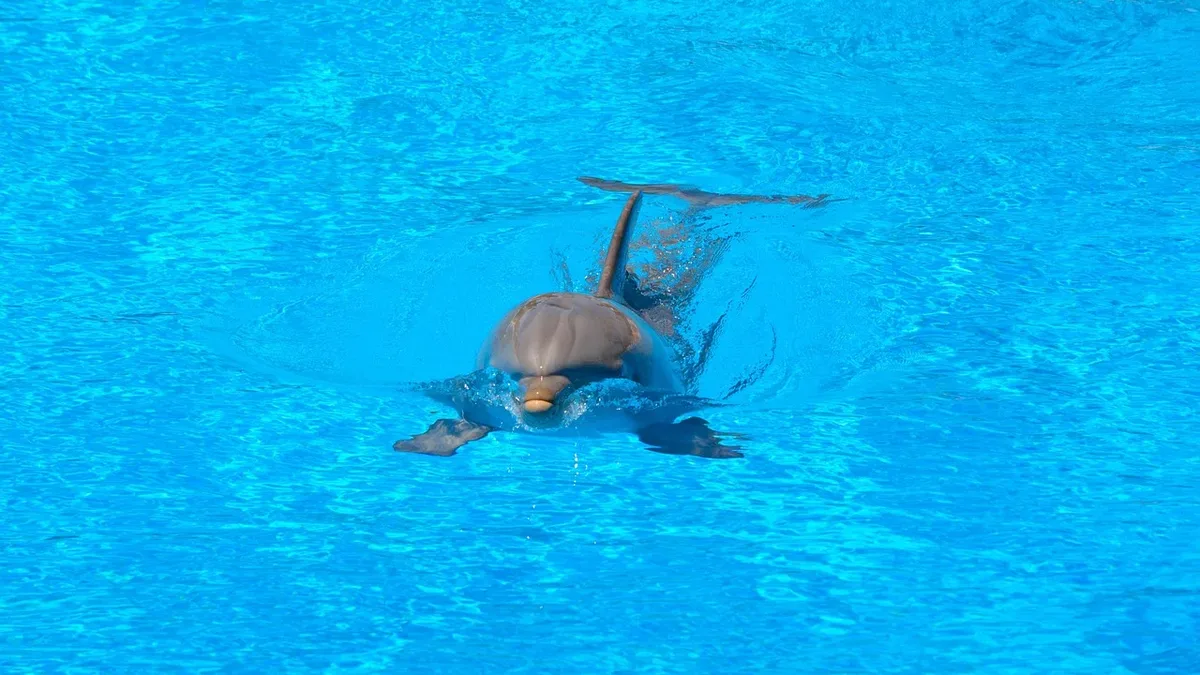
Environmental groups failed in a legal bid to permanently stop underwater blasting in a critical habitat for the vulnerable Chinese white dolphin. The court rejected the public-interest lawsuit in August 2025, ruling that non-governmental organisations lack the standing to bring such cases for marine environments.
When volunteers learned of planned reef blasting in Fujian province's Weitou Bay for a pier construction project, they mobilized. They filed complaints and raised public awareness. This public pressure led authorities to suspend the blasting work temporarily. Seeking a permanent halt, the group Friends of Nature then filed a lawsuit. According to an account written by staff from Friends of Nature and ChinaBlue and reported by Dialogue Earth, the court later rejected their application.
Why NGOs can't sue for the ocean
China's system for environmental public-interest lawsuits, reinforced by the new Ecological and Environmental Code, allows qualified civil society organisations to sue over land-based issues like pollution and wetlands. Wang Hui, a professor at Shanghai University of Political Science and Law, told Dialogue Earth this legal route is more effective than complaints alone. However, a 2022 legal interpretation and a 2023 law revision explicitly grant this power for marine cases only to government agencies and prosecutors, not NGOs.
Professor Wang Canfa of the China University of Political Science and Law explained the complexity to Dialogue Earth. "A marine environmental issue can be very far-reaching," he said, involving multiple authorities and often crossing jurisdictions. He also cited the high cost and technical difficulty of gathering evidence at sea as barriers for most groups.
In the Weitou Bay case, Friends of Nature found the project's environmental impact assessment had not considered blasting. They also encountered authorities passing responsibility, making a lawsuit their "last resort."
Other legal avenues exist
While blocked from pure marine cases, NGOs have succeeded with lawsuits involving coastal zones. In 2021, Friends of Nature won a case over damage to natural shoals and waterbird feeding grounds from a construction project in Lianyungang, Jiangsu. The court ordered a construction halt. That case was heard because it concerned coastal wetlands, not a strictly marine environment.
Wang Hui questioned the value of this legal distinction, given the interconnectedness of land and sea ecosystems.
Improving NGO impact
Professors Wang Hui and Wang Canfa both argue civil society organisations should have standing for marine lawsuits. Wang Canfa urged groups to build professional capabilities in investigation and legal argument. Academic Lin Wei suggested a workaround: NGOs can report ocean damage to regulators and, if ignored, alert prosecutors to consider a lawsuit.
Over a year after the court's refusal, the volunteers continue monitoring the Chinese white dolphin's habitat. For them, the legal effort was about slowing development and creating space for nature.