Nepal flood alert gap left 1,000 dead
Scientists say a rock-ice avalanche triggered Nepal's August 26 floods, which killed over 1,000 people. A working warning system sent alerts, but a failure to translate them into clear action plans left people unsure how to evacuate.
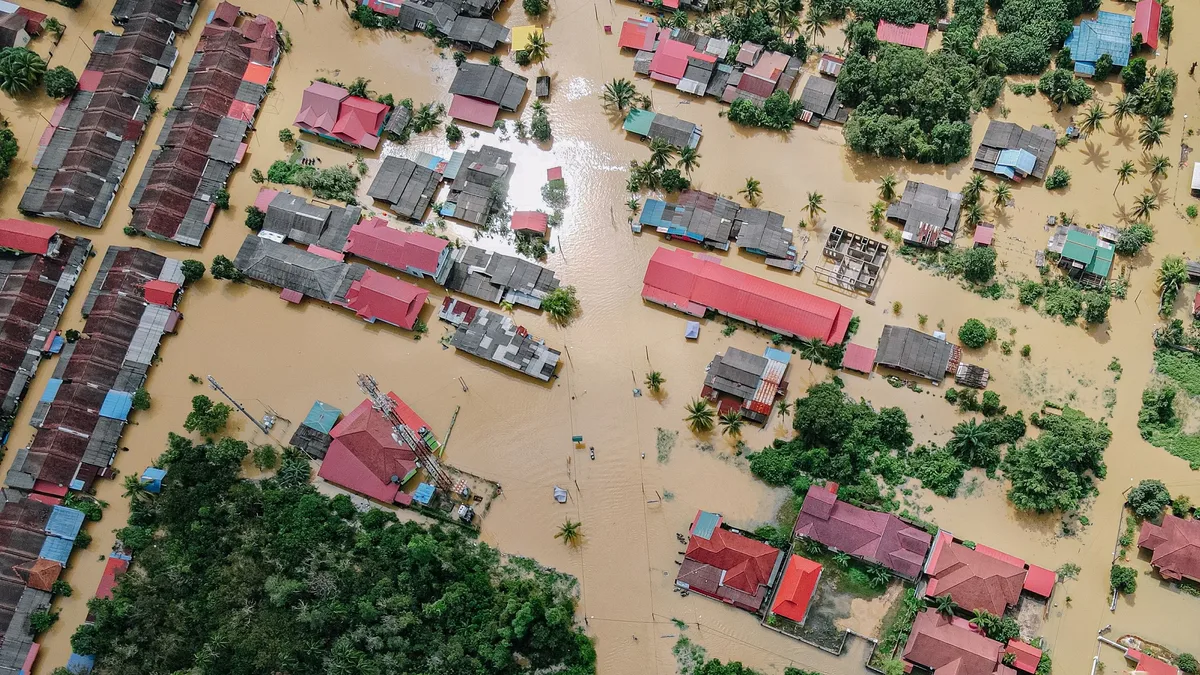
Over 1,000 people are confirmed dead and 4,000 are missing after devastating floods swept through Nepal's Rasuwa district on August 26. Scientists from the International Centre for Integrated Mountain Development (ICIMOD) are analyzing the disaster, with preliminary evidence pointing to a rock-ice avalanche as the trigger.
Saswata Sanyal, ICIMOD's intervention manager for disaster risk reduction, told Dialogue Earth that the event involved more rock than ice. The exact cause remains under investigation. Scientists are examining factors including a possible earlier seismic event and the potential amplifying effect of a major flood in the same region just over a year ago.
A Changing Hazard Landscape
While the specific trigger cannot yet be attributed to climate change, the broader hazard landscape in the Hindu Kush Himalaya (HKH) region is transforming. A 2023 ICIMOD report outlined unprecedented and largely irreversible changes to glaciers, snow, and permafrost, driven primarily by climate change. Warming is increasing at higher elevations, accelerating glacier melt and permafrost thaw.
An ICIMOD assessment in March found glaciers across the HKH have continued to lose mass, with the rate of loss accelerating since 2000. Sanyal explained that risk in the region is dynamic and outpacing past planning efforts. He warned of complex disasters involving cascading, compound, or amplified impacts, beyond just glacial lake outburst floods.
The Gap Between Alert and Action
The disaster revealed a critical failure in response, not in detection. According to Sanyal, early warning systems functioned and people received SMS alerts about the impending flood on August 26. The system broke down afterward. There was a gap between alert and action, Sanyal stated.
People did not know what to do with the warning or where to evacuate. The area contained many pilgrims, migrant workers, and tourists who lacked local knowledge. Sanyal noted that mountain communities possess indigenous understanding, but transient populations do not. He emphasized the need for warnings that clearly communicate the scale of an event and specify evacuation routes and actions.
Monitoring and Data Challenges
Monitoring for events like rock-ice avalanches in the remote HKH is exceptionally difficult. Sanyal said it is impossible to have monitoring stations everywhere. Potential strategies include identifying and mapping unstable glaciers, then monitoring them with cameras or geophones. He cited examples from the European Alps where such monitoring enabled pre-event evacuations, but noted the Himalayan scale and remoteness present a far greater challenge.
Effective cross-border data sharing is another hurdle. Disasters don't respect boundaries, Sanyal said, calling for enhanced cooperation between countries like China and Nepal. He stressed that moving forward will require better use of Earth observation data and a regional awakening to the new possibilities of complex, interconnected hazards.