Frog size sorting in Western Ghats streams
A study finds frog species in the Western Ghats that live together differ in body size, a pattern driven by competition and ecological sorting.
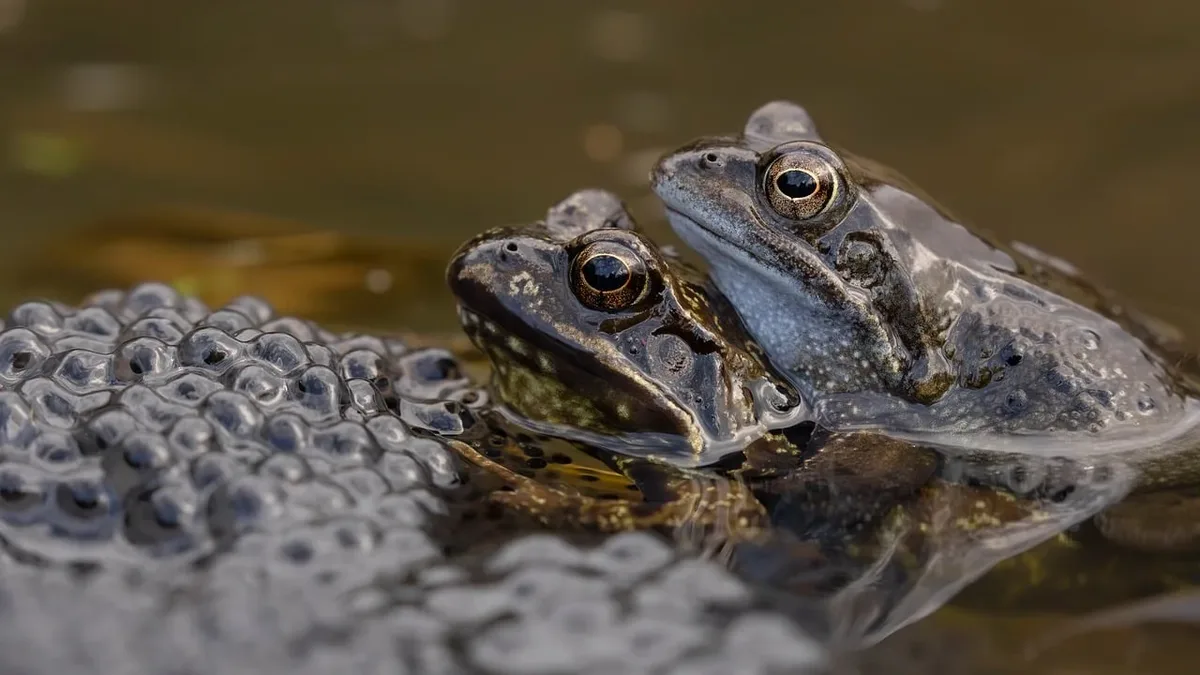
A new study from the Centre for Ecological Sciences at the Indian Institute of Science, Bengaluru, reveals that closely related frog species in the Western Ghats sort themselves by body size to coexist. The research, led by Kartik Shanker, examined three frog genera: the region-endemic Nyctibatrachus and Micrixalus, and the more widespread Hylarana.
Scientists analyzed body-size differences, phylogenetic relationships, distribution, and microhabitat use. They discovered clear patterns of body-size assortment among stream-dwelling frogs. This was especially strong in the endemic groups. Species found living together were significantly more different in size than chance would predict.
Patterns of Size Assortment
The data showed consistent size sorting. Among 27 three-species Nyctibatrachus assemblages, 23 contained species from different body-size classes. For the 19 two-species Micrixalus assemblages, every single pair belonged to different size classes.
Kartik Shanker, the paper's first author, attributes this pattern to competition and "species sorting." This ecological process sees competition exclude species with similar traits from local communities. More dissimilar species are allowed to coexist. The pattern was missing in the Hylarana genus. Shanker suggests the two endemic clades adapted early to streams and ponds, creating a separation.
Microhabitat and Ecological Advantage
Size differences were most pronounced among species sharing the same habitat. The study found body-size differences between sympatric Nyctibatrachus species were greater than between those in adjacent but separate areas. A link between body size and microhabitat emerged for Nyctibatrachus.
Such differences let species use different parts of the same stream. Competition is reduced. "Larger bodies allow them to hold on to the rocks in the faster-flowing parts of the streams, smaller bodies allow them to hide in the leaf litter," Shanker explained. This relationship was not significant in Micrixalus or Hylarana, indicating other forms of niche partitioning may operate there.
Competition Without Evolution
Critically, the researchers found no strong evidence that competition directly drove the evolution of body size. "We find that competition did not lead to evolutionary divergence," Shanker stated. The pattern likely arose from species sorting after divergence into different species. It operates more on an ecological than an evolutionary scale. "But the driver is competition," Shanker affirmed.
The study thus provides evidence that competition can structure biodiversity without necessarily driving adaptive evolution. A potential conservation implication, noted by Shanker, is that alterations to microhabitats could threaten species even when the broader forest remains intact. Changes to stream flow or edge vegetation could disrupt the delicate size-based partitioning that allows these frog communities to persist.