Shandong retires 555 small coal units
China's Shandong province has retired 555 small coal-fired power units since 2021, cutting 17.5 gigawatts of capacity and reducing average coal consumption.
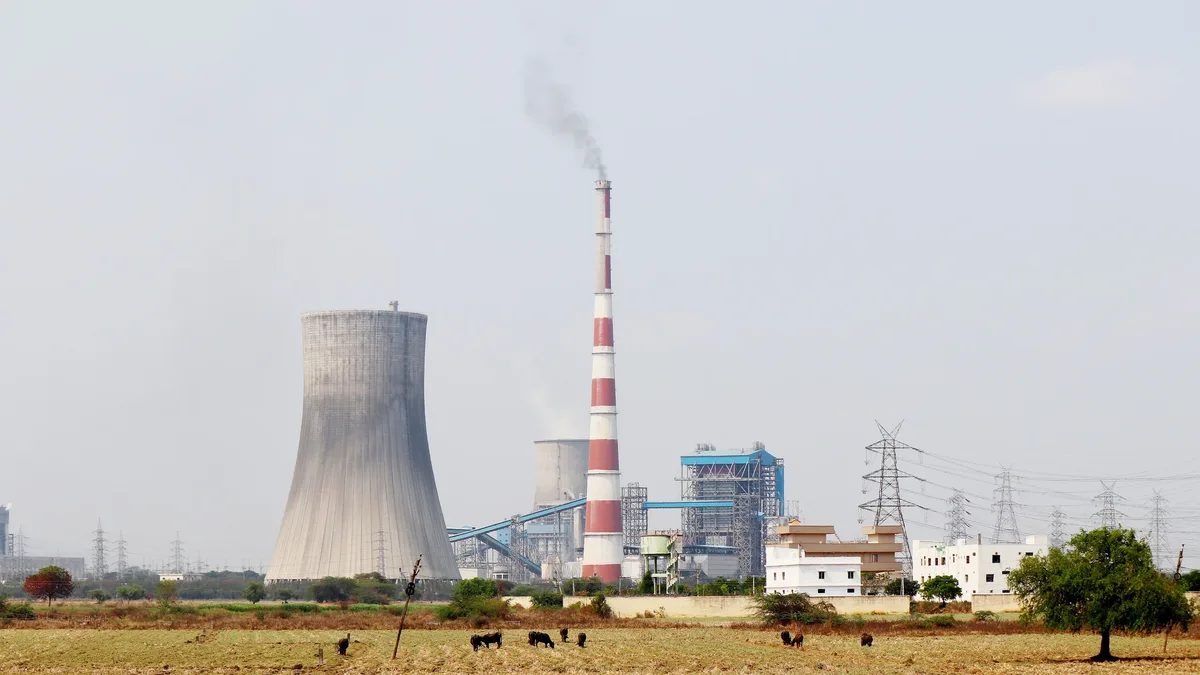
Shandong's energy authorities announced in June the complete shutdown of all small coal-fired "extraction condensing" units. Between 2021 and 2025, the province retired 555 coal-fired units under 300 megawatts, removing 17.5 gigawatts of capacity, more than any other Chinese province.
Closing these less-efficient units has lowered Shandong's average coal consumption per kilowatt-hour from 308 grams of standard coal in 2020 to under 295 grams. As one of China's most populous and industrialised provinces, Shandong has high demand for electricity and heating, with coal power long playing a critical role for industry, households, and district heating.
How Shandong prepared
Shandong led this retirement because it gradually put alternatives in place. First, rapid renewable expansion created room to reduce coal reliance. Between 2021 and 2025, non-fossil sources accounted for 93% of new power capacity. Their combined capacity now represents around 55% of Shandong's total installed capacity.
Second, developing clean heating and long-distance heat transmission ensured stable heat supply. The province explored diverse cleaner options, including nuclear heating, geothermal energy, biomass, and heat pumps. Haiyang nuclear power station became the world's largest nuclear co-generation project, heating around 400,000 residents. China's largest long-distance heat delivery project connects three Shandong cities, heating over 90 million square metres.
Shandong also encouraged three types of retrofits for coal power generators between 2021 and 2025.
| Retrofit Type | Capacity Retrofitted (2021-2025) |
|---|---|
| Energy-efficiency and carbon-reduction | Around 25 gigawatts |
| Heating retrofits | Around 26 gigawatts |
| Flexibility retrofits | Around 49 gigawatts |
The next problem
With smaller units gone, reducing reliance on coal while maintaining secure heat and electricity is the next, harder challenge. Coal burning still accounts for around 85% of space heating and more than 95% of industrial steam supply. Heat cannot be transported quickly over long distances. Where local alternatives are insufficient, consequences for residential heating and industrial production are immediate.
Many coal plants provide heat, especially in winter. They often must keep generating electricity to keep heat flowing, even during a power oversupply. Increased solar power has made this more acute. At midday, solar peaks, but heat demand means combined heat and power units must keep running. This limits the system's ability to accommodate renewable energy.
Coal power is still heavily used for peak regulation. It remains common for plants to significantly cut output (deep peak regulation), shut down and restart (start-stop regulation), or use rotating shutdowns. This increases equipment wear, operational risks, and coal consumption per unit of electricity.
Reshaping coal power's role
A real transition requires cleaner, more flexible resources to take over coal power's functions in heat supply and system balancing. Shandong needs to continue diversifying heat sources. It should improve interconnections between local heating networks and coordinate them through smart systems. Urban renewal and heating network planning should be better integrated.
To encourage investment in costlier options like heat pumps, biomass, and geothermal, more effective cost-sharing mechanisms are needed. Retrofits to combined heat and power units should speed up to uncouple heat and power generation. The flexible use of electric boilers and hot water storage tanks could increase supply flexibility, according to the source report from Dialogue Earth.