China leads green ship orders as fuel standards remain uncertain
Chinese shipyards hold 63% of global orders for low-carbon vessels, but uncertainty over fuel standards and high costs threaten the transition.
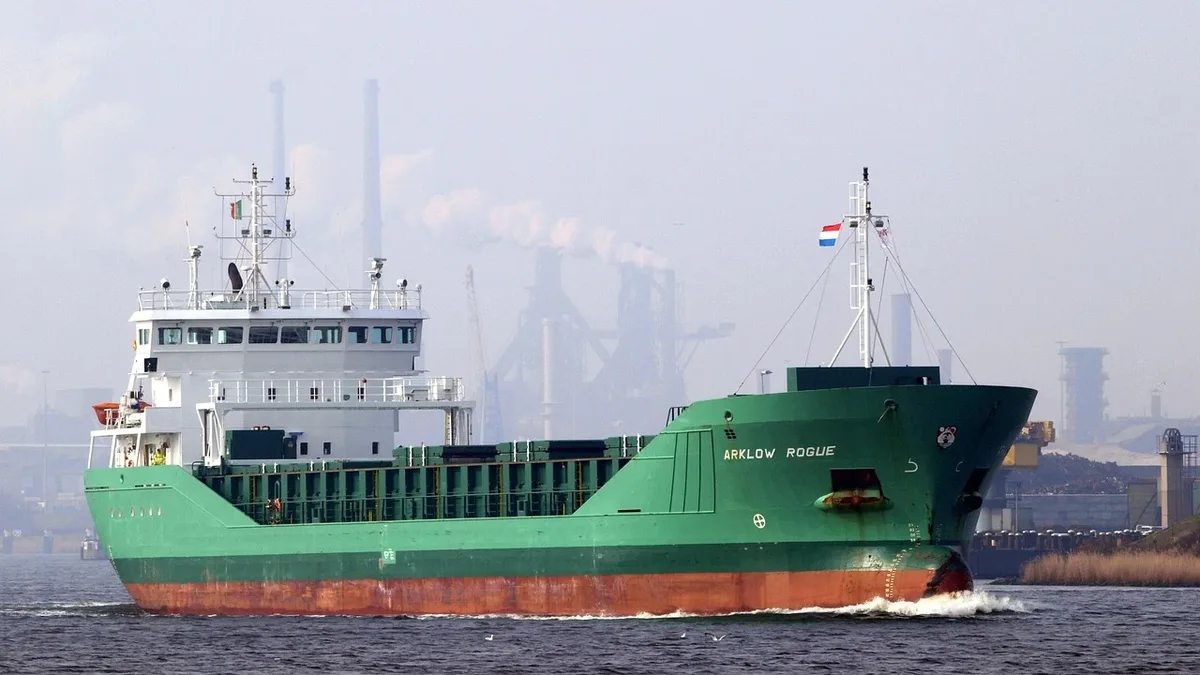
Chinese shipyards are dominating global orders for greener vessels, securing 63% of all ship orders last year. This push comes as the industry faces a critical shortage of affordable clean fuel and stalled global regulations, according to industry executives. The delay in adopting the International Maritime Organization's Net-Zero Framework has prolonged uncertainty over a global fuel standard and pricing mechanism. In October 2025, negotiations were adjourned for a year, a move China supported amid opposition from the United States and Saudi Arabia.
Competitors in South Korea and Japan are responding by accelerating automation in their shipyards. They face labor shortages, ageing workforces, and rising costs. HD Hyundai has introduced robots for welding, while Hanwha Ocean says one worker can now supervise up to ten robots. Japan's Fanuc is working toward a future where shipyards deploy as many robots as people, potentially enabling overnight operations.
The Fuel Dilemma
Nearly all of shipping's operational greenhouse gas emissions come from fuel use. The industry is developing next-generation ships before the net-zero rulebook is agreed, but the clean fuels to power them remain costly and scarce. Panellists at a recent sustainability conference agreed no single fuel will decarbonise the entire industry. "Green methanol, biofuels, ammonia, hydrogen derivatives and future e-fuels will likely coexist," said Chester Lee of Towngas.
Green methanol has seen the fastest commercial scale-up. However, its high production cost creates a significant premium over fossil fuels. The cost comparison and lower energy content present a major commercial hurdle.
| Fuel Type | Estimated Cost per Tonne (USD) | Notes |
|---|---|---|
| Bio-methanol | $900 - $1,400 | Lower energy content than LNG |
| E-methanol | $1,600 - $2,400 | Lower energy content than LNG |
| Fossil LNG | $600 - $900 | Transition fuel with methane leakage risks |
LNG is increasingly seen as a transition fuel due to its availability and economics. "More and more players are more comfortable with LNG as a transition fuel of choice," said Mark Teng of SeaKapital. Yet its climate benefits can be diminished by methane leaks during production and use.
China's Strategic Shift
China's energy transition is entering a new phase, moving from expanding renewable power capacity to redesigning fuels and value chains for hard-to-abate sectors like shipping. The energy transition is no longer only about adding more renewables, it is about redesigning the fuels and value chains, said Li Fan of COSCO SHIPPING Ports. The country is also seeking greater influence over global standards, moving from rule-follower to co-shaper.
Authorities plan to develop Shanghai into an international green-fuel bunkering hub by 2030. The goal includes developing an annual bunkering capacity of one million tonnes for methanol and biofuel, alongside large-scale LNG capacity. Shanghai aims to position itself at the intersection of fuel supply, trading, finance, and international standards.
The Automation Response
As China leads on orders, South Korean and Japanese shipbuilders are setting ambitious automation targets to improve productivity. HD Hyundai is targeting partially 'dark' factories-highly automated facilities needing limited human intervention-by 2030. Hanwha Ocean aims to automate 70% of its manufacturing processes.
This shift is a direct response to domestic constraints. Japan and South Korea are dealing with ageing workforces and difficulties recruiting enough labor. Automation allows them to increase output without expanding their human workforce, extending production hours and assigning robots to routine tasks. The next milestones are already defined, with both companies working toward their 2030 automation goals while Chinese yards continue to secure the majority of new ship orders.