GRAP fails to curb Delhi pollution spikes despite escalating AQI stages
Delhi's Graded Response Action Plan has failed to prevent AQI increases in 10 of 12 major pollution episodes since 2022.
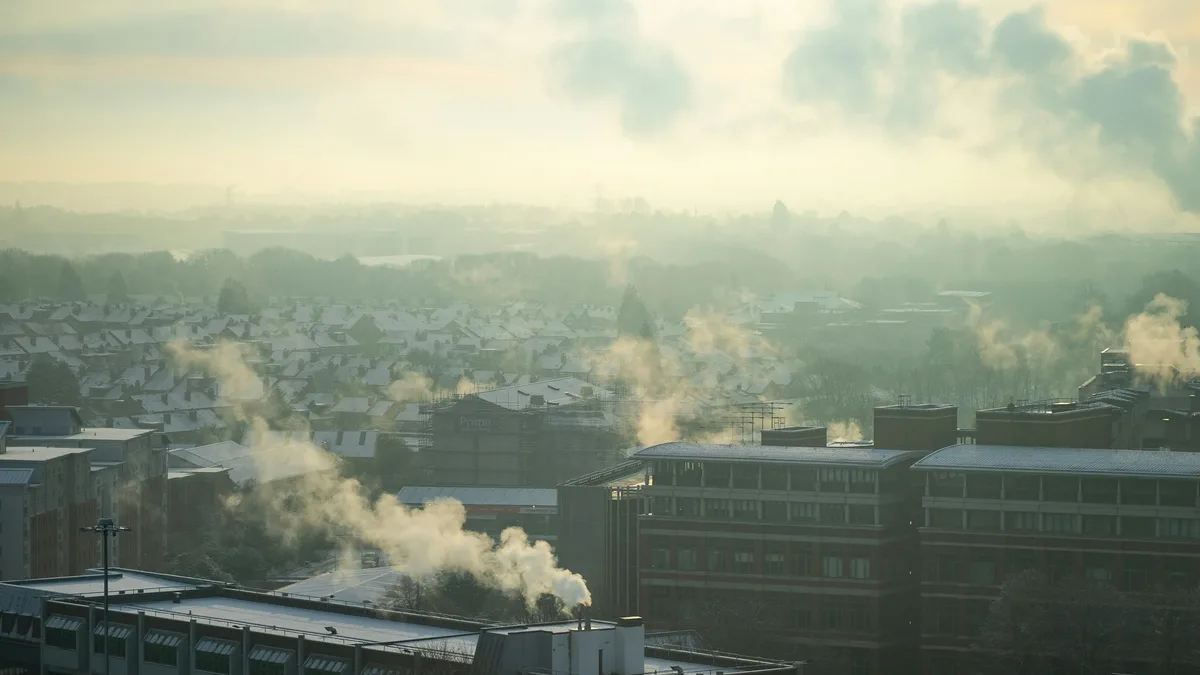
Delhi's Graded Response Action Plan failed to curb pollution spikes in 10 of 12 major episodes since 2022. Pollution levels rose in the week after GRAP stages 3 and 4 were invoked, with the largest AQI increase hitting 114 points following the November 2, 2023 episode, jumping from 317 to 431.
Other significant increases followed episodes on October 29, 2022, with a 100-point rise, January 3, 2025 with a 94-point rise, and January 28, 2025 with a 92-point rise. The analysis by the Centre for Research on Energy and Clean Air examined 12 episodes where the AQI escalated from below the Stage 3 threshold to either Stage 3 or Stage 4 levels.
GRAP stages and restrictions
GRAP is a preventive framework with four AQI-based stages, overhauled in 2022. It is invoked by a sub-committee under the Commission for Air Quality Management in the National Capital Region. The stages trigger at specific forecast levels and impose escalating restrictions.
| Stage | AQI Forecast Trigger | Key Restrictions |
|---|---|---|
| Stage 3 | Over 400 | Halts non-essential construction; restricts private BS-3 petrol and BS-4 diesel or lower four-wheelers |
| Stage 4 | Touching 450 | Bans entry of trucks and heavy goods vehicles below BS-4; stops all construction or demolition |
GRAP ineffective in preventing pollution spikes
The analysis shows AQI does not dip immediately after GRAP invocation. Mean AQI was 25% above the preceding seven-day average on the first two days after escalation. It remained 15% above baseline by the seventh day. There has been no significant improvement in longer-term pollution levels from 2022 to 2026.
Manoj Kumar, an analyst at CREA who led the study, stated that GRAP has failed to control episodic pollution events. Improvements, he noted, occur only after a week or more. The analysis does not claim GRAP restrictions caused the pollution increases. Weather fluctuations may have affected trends but were not specifically accounted for in this study.
Long-term winter AQI trends show a variable pattern, with the mean AQI rising from 280 in 2022-23 to 304 in 2023-24, falling to 285 in 2024-25, and increasing again to 295 in 2025-26.
| Winter Season | Mean AQI | Median AQI | 90th-percentile AQI |
|---|---|---|---|
| 2022-23 | 280 | 294 | 377 |
| 2023-24 | 304 | 324 | 400 |
| 2024-25 | 285 | 289 | 396 |
| 2025-26 | 295 | 305 | 390 |
Expert criticism of GRAP implementation
Experts point to flaws in how the plan is executed. Sunil Dahiya, founder of Envirocatalyts, noted that GRAP stages are often not imposed the recommended three days in advance. Forecasts used to trigger actions can be inaccurate. Meteorological conditions, particularly slow wind speeds during winter, further delay the dispersion of pollutants, undermining reactive measures.
Despite its documented shortcomings, other research suggests GRAP has had some mitigating effect. One study found that without GRAP, Delhi would have faced 60% more hours of severe AQI and between 60% to two times more hours where the AQI exceeded 30 severe-plus levels.
CREA argues that emission reduction at source should be the primary objective for clean air. The Graded Response Action Plan, they state, must be treated strictly as a last line of defence.