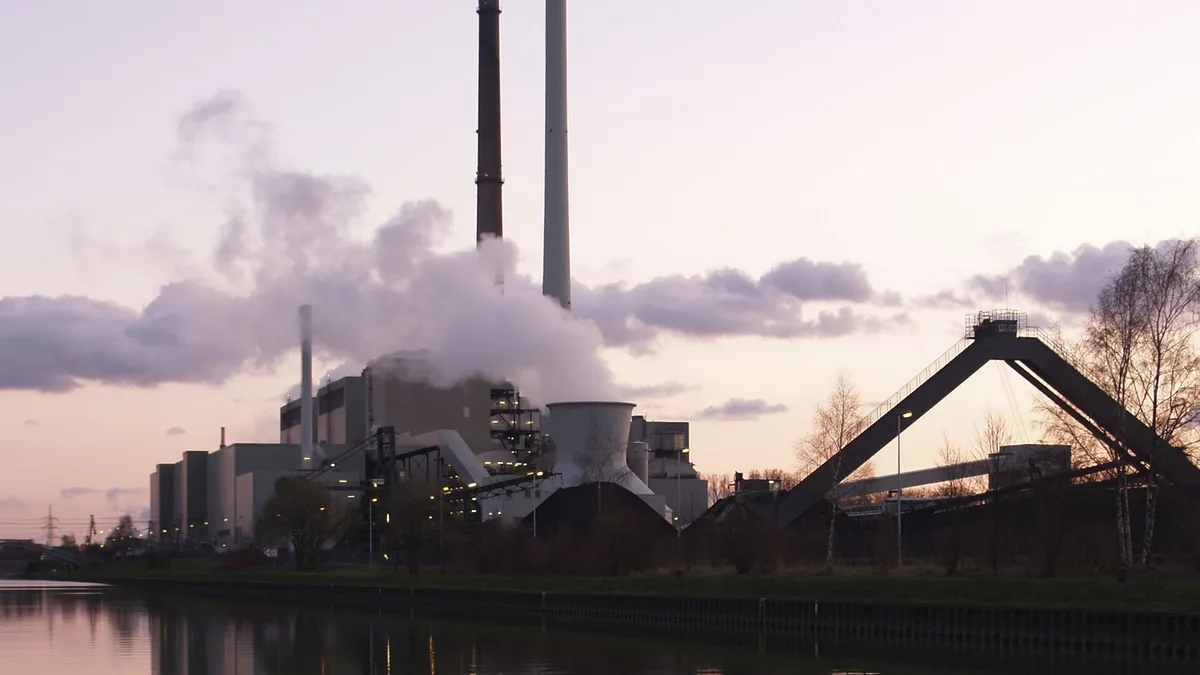
Emissions Trading Pilots
| Contaminant type | Market-based environmental policy mechanism |
|---|---|
| Primary pollutant targeted | Carbon dioxide (CO₂) |
| Typical scale of implementation | Regional or national |
| Core operational principle | Cap-and-trade |
| Key regulated entities | Large industrial facilities and power plants |
| Original purpose | Cost-effective reduction of aggregate emissions |
| First major pilot programs launched | Late 20th to early 21st century |
Origin and history
Emissions Trading Pilots originate from the United States in the late 20th century. The concept was first implemented in the 1970s for controlling airborne pollutants like sulfur dioxide and nitrogen oxides. These early programs established the foundational "cap-and-trade" model for market-based environmental regulation. The approach was later adapted and expanded upon in the 1990s with the U.S. Acid Rain Program, which provided a large-scale proof of concept. The model gained international prominence following its inclusion in the 1997 Kyoto Protocol as a mechanism for reducing greenhouse gases. Since then, numerous regional and national governments have launched their own pilot programs to test the framework within specific economic and political contexts.
What it is for
Emissions Trading Pilots are designed to control and reduce the release of specific pollutants into the environment at a lower overall economic cost than pure command-and-control regulation. They are implemented to achieve a quantifiable reduction in a contaminant, such as particulate matter or carbon dioxide, within a defined geographic area. The primary purpose is to provide regulated entities, like power plants or industrial facilities, with flexibility in how they meet mandated emission reduction targets. By creating a market for emission allowances, the system incentivizes innovation and rewards entities that can reduce their pollution most cheaply. The data and experience gathered from these pilots are used to refine the design of larger, permanent emissions trading systems. Ultimately, the goal is to improve air quality or mitigate climate change while minimizing disruption to economic activity.
Overview
An Emissions Trading Pilot is a trial program that establishes a market for pollution permits within a specific jurisdiction and for a specific set of pollutants. The regulatory authority first sets a total cap on allowable emissions, which declines over time to ensure environmental improvement. It then distributes or auctions a limited number of allowances, each permitting the release of a specific quantity of the pollutant. Regulated entities must surrender allowances equal to their actual emissions over a compliance period. Companies that reduce their emissions below their allowance allocation can sell their surplus allowances to those for whom reduction is more costly. This market mechanism ensures the overall emission cap is met, while the cost of compliance is distributed efficiently across the regulated sector.
What to know
The success of a pilot heavily depends on the accuracy of emissions monitoring, reporting, and verification (MRV) systems, as the market cannot function without trustworthy data. Setting the initial cap at an appropriate stringency is critical; a cap that is too lenient will not drive reductions, while one that is too severe may cause economic shock and political backlash. The method of allocating initial allowances, whether through free distribution based on historical emissions or via auction, has significant distributional economic and political consequences. Market stability measures, such as allowance price floors and ceilings, are often incorporated into pilot designs to prevent extreme volatility that could undermine the program. Pilots are typically limited in duration, geographic scope, and sectoral coverage to contain risk and allow for evaluation before scaling up. The legal authority underpinning the pilot must be clear to ensure regulated entities have compliance obligations and the market has regulatory certainty.
Common questions
A common question is whether emissions trading simply allows polluters to pay to pollute, rather than actually cleaning up. Another frequent inquiry concerns the risk of "hot spots," where localized pollution might increase if one facility buys many allowances instead of reducing its own emissions. People often ask how the revenue from auctioning allowances is used, which can vary from reinvestment in clean technology to offsetting costs for consumers. Many wonder about the difference between a pilot program and a full-scale system, with pilots being smaller-scale tests that may lead to a permanent program. Questions also arise about which entities are covered by the pilot, typically focusing on large, stationary sources of pollution like power generation and heavy industry. There is also considerable interest in how the price of an emission allowance is determined, which is a function of market supply and demand influenced by the stringency of the cap and the cost of abatement technologies.
Pros and cons
A significant pro is that emissions trading achieves environmental goals at a lower aggregate cost than uniform standards, as it harnesses market forces to find the cheapest reductions first. It provides continuous incentives for innovation in pollution control technologies, as any reduction below the cap has direct financial value. A major con is the complexity of designing and administering the system, requiring robust monitoring and enforcement infrastructure that can be costly to establish. Political interference, such as setting an initially weak cap or over-allocating free allowances to favored industries, can render a pilot ineffective at driving real emission cuts. A common mistake is failing to account for all major emission sources within the pilot's scope, which can lead to leakage where pollution simply shifts to unregulated areas or sectors. Entities often regret participating if the allowance market becomes highly volatile, making long-term investment planning for abatement equipment difficult and financially risky.
Who it suits
Emissions Trading Pilots suit jurisdictions with a strong administrative capacity to monitor emissions and enforce compliance, as well as a transparent legal and financial framework to support a new market. They are appropriate for controlling pollutants that are uniformly mixed in the atmosphere over a wide area, such as greenhouse gases, where the location of the reduction is environmentally less critical. This approach suits industries with varying costs of pollution abatement between different facilities, as the trading potential creates the greatest economic benefit. Policymakers seeking a market-oriented, cost-effective tool for environmental regulation, rather than direct prescription of technologies, will find it suitable. It does not suit situations where localized pollution impacts are the primary concern, as trading could exacerbate community-level exposure, nor does it suit pollutants with severe immediate health impacts at the point of release. The model is best for mature industries where emissions can be consistently and accurately measured, as opposed to diffuse or hard-to-quantify sources.
Latest Emissions Trading Pilots news
Latest reporting
China's 15th Five-Year Plan Sets Ambiguous Pollution Pathway
China's new five-year policy framework for 2026-2030 lacks absolute caps on CO2 and coal, allowing emissions to potentially rise with economic growth
China's August Emissions Fall as Renewables Cover Power
A new analysis shows China's emissions declined broadly in August 2026, with fossil fuel use and industrial output weakening.

Delhi Drafts Drone Policy to Monitor Pollution and Safety
Delhi's government has drafted a five-year drone policy to deploy unmanned aircraft for monitoring air pollution, industrial emissions, and Yamuna...

Singapore's CIX and London's Carbonplace
Climate Impact X and Carbonplace announced a merger on August 26, aiming to create a larger carbon credit trading platform by combining exchange and
Chinese firms reshape Indonesia's petrochemical ambitions
Chinese firms invest billions in Indonesia's petrochemical sector as Beijing tightens domestic emissions rules.
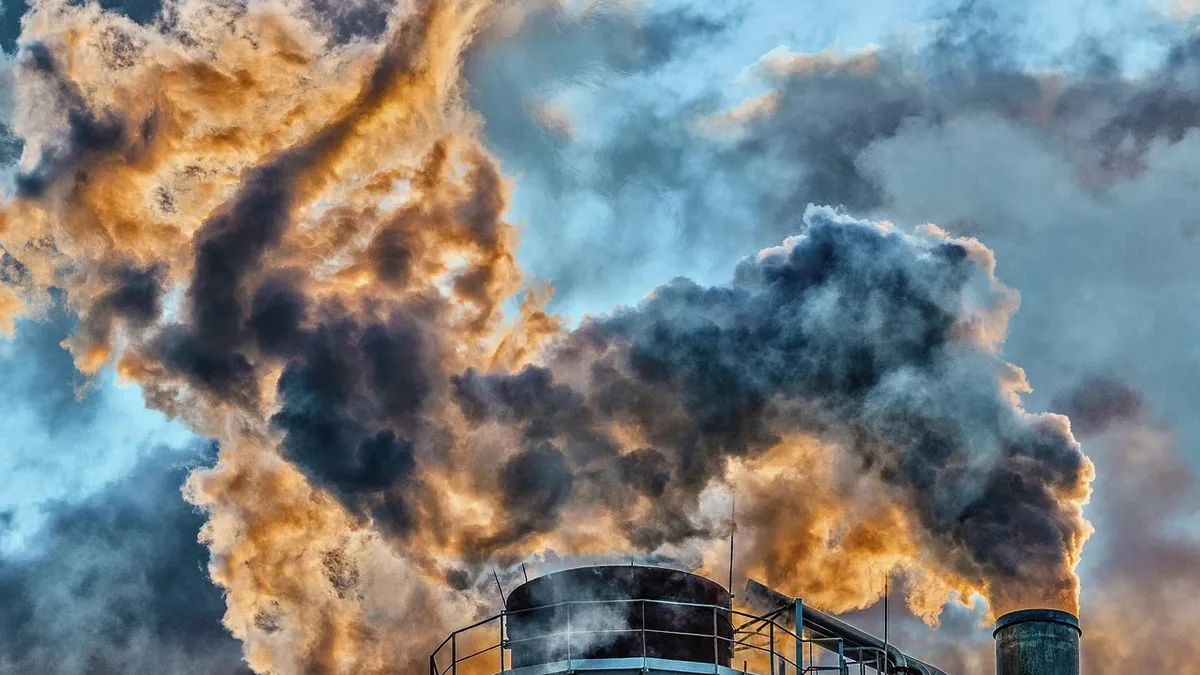
China's CO2 Emissions Drop in July
China's CO2 emissions fell in July due to a decrease in power generation from coal and gas, alongside reduced coal, cement, and crude steel output.