Delhi offers free solar panels
The Delhi government has increased its subsidy for rooftop solar panels to ₹78,000 and will provide fully funded systems to households using 400 units of
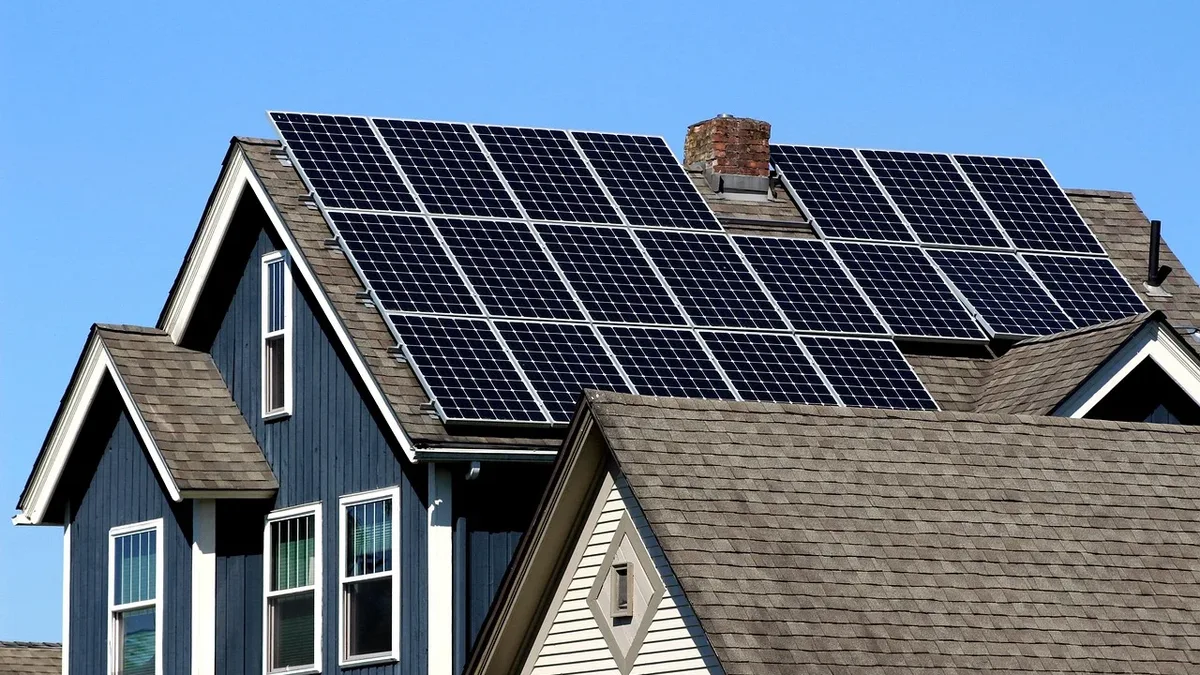
The Delhi government announced a major increase in subsidies for rooftop solar panels on Tuesday. Chief Minister Rekha Gupta said households with a monthly electricity consumption of 400 units or less will be eligible for a fully funded 3-kilowatt system.
Under the revised Delhi Solar Policy, the state subsidy for a 3-kW system has been raised to ₹78,000. Combined with an equal contribution from the central government's PM Surya Ghar initiative, this will cover the full setup cost for many residents. Gupta stated the government's goal is to install rooftop solar in 230,000 households across Delhi by March 2027.
"The government not only wants to reduce people's electricity bills but also to support the installation cost of solar panels," Gupta said at a press conference.
Subsidy structure and costs
The policy introduces an additional state top-up of ₹19,000 for consumers using up to 400 units per month. This top-up, combined with the central and state subsidies, is designed to eliminate the upfront cost for a standard 3-kW system priced at ₹1.75 lakh. Households consuming more than 400 units monthly will not receive this extra ₹19,000 support.
The financial support varies based on a home's electricity consumption and the size of the solar system installed. The government provided detailed estimates for different scenarios.
| Monthly Consumption (units) | System Size | Total Estimated Cost | Central Subsidy | Delhi Subsidy | Delhi Top-up | Total Support | Est. Avg. Monthly Benefit |
|---|---|---|---|---|---|---|---|
| 0-200 | 2 kW | ₹1.30 lakh | ₹60,000 | ₹52,000 | ₹18,000 | ₹1.30 lakh | ₹300 (savings only) |
| 0-200 | 3 kW | ₹1.75 lakh | ₹78,000 | ₹78,000 | ₹19,000 | ₹1.75 lakh | ₹950 |
| 201-400 | 2 kW | ₹1.30 lakh | ₹60,000 | ₹52,000 | ₹18,000 | ₹1.30 lakh | ₹1,659 |
| 201-400 | 3 kW | ₹1.75 lakh | ₹78,000 | ₹78,000 | ₹19,000 | ₹1.75 lakh | ₹1,659 |
| Over 400 | 3 kW | ₹1.75 lakh | ₹78,000 | ₹78,000 | Not eligible | ₹1.56 lakh | ₹2,143 |
Expected benefits for residents
The policy calculates not just upfront costs but also ongoing savings and potential income. For a household in the 0-200 unit category installing a 2-kW system, the government estimates monthly electricity savings of about 200 units. This translates to a benefit of roughly ₹300 per month, assuming a rate of ₹3 per unit.
Benefits are higher for larger systems. A 3-kW system for the same low-consumption home is expected to save around 200 units monthly and export another 100 units to the grid. Payment for this exported power is estimated at ₹650 per month, creating a total average monthly benefit of ₹950.
The estimated average additional monthly benefit for homes consuming 201-400 units is ₹1,659. For households using over 400 units, the average additional monthly benefit is projected to be ₹2,143. Surplus electricity from these larger systems is eligible for payment at a higher rate of ₹6.50 per unit.
Support for housing societies
The revised framework also extends support to group housing societies for installing solar systems in common areas. For a proposed 100-kW system costing an estimated ₹45 lakh, the central subsidy would be ₹18 lakh and the Delhi government subsidy ₹11 lakh. This would leave a consumer contribution of ₹16 lakh. The estimated average additional monthly benefit for such a system is ₹81,247.
Gupta said this rooftop solar programme is a key part of the government's "Green Delhi" initiative. She noted that currently, around 10,000 buildings in Delhi have rooftop solar panels installed, with most being government buildings.