IEEFA: Integrate Indonesia's 100 GW solar target into national power plan
A think tank says Indonesia must integrate its 100-gigawatt solar target into the national least-cost electricity plan to displace coal.
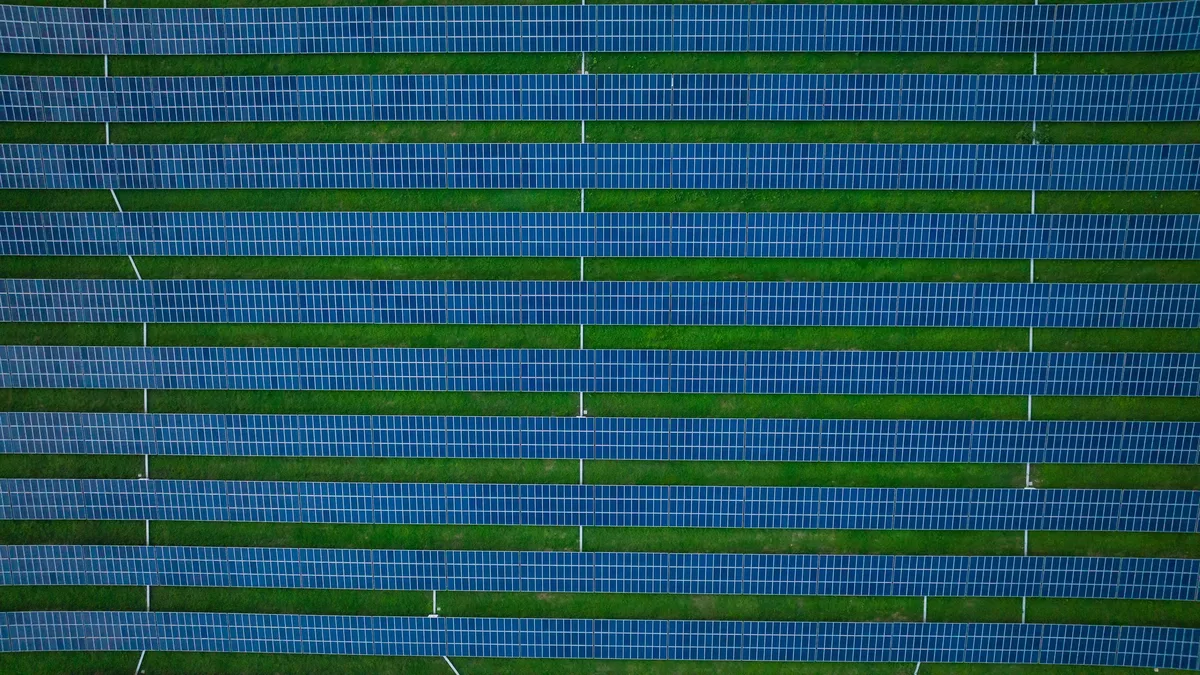
Indonesia should embed its new 100-gigawatt solar programme into its national least-cost electricity planning framework, a new analysis argues. The Institute for Energy Economics and Financial Analysis (IEEFA) says the plan, launched by President Prabowo Subianto on 25 August, must be part of the official 10-year Electricity Supply Business Plan (RUPTL).
IEEFA's report states that integrating the solar target would allow the government and state utility PLN to coordinate investments in generation, transmission, and storage. This would focus spending on locations and technologies offering the strongest economic and technical returns.
Planning for different solar types
The think tank recommends that future RUPTL revisions plan for several types of solar projects together, rather than treating them separately. The analysis highlights significant potential across different formats.
| Project Type | Potential Capacity |
|---|---|
| Floating Solar | Up to 91.6 GW |
| Rooftop Solar | 30 to 40 GW |
This combined approach would incorporate ground-based solar farms, floating solar on lakes and dams, and rooftop installations on households and businesses.
The real cost of replacing fossil fuels
The study notes that displacing fossil fuel generation requires significantly more solar capacity. Replacing coal and gas-fired power would need about three times more solar capacity to produce the same electricity volume. Replacing diesel generation would require roughly twice as much.
IEEFA argues Indonesia's power planning must reflect current and projected generation costs, not outdated assumptions that coal is the cheapest option. The report provides levelised cost estimates, showing solar is now cheaper. According to the stats, utility-scale solar is about 44 percent cheaper than coal at the low end of the cost ranges.
| Generation Type | Cost per kWh (USD) |
|---|---|
| Coal-fired | $0.10 to $0.15 |
| Utility-scale Solar PV | $0.05 to $0.08 |
| Onshore Wind | $0.06 to $0.10 |
At the low end of these ranges, utility-scale solar is about 44 percent cheaper than coal. Onshore wind is around 32 percent cheaper. The report says coal generation costs rose 46 percent to IDR930 (US$0.052) per kWh in 2025 and could reach IDR1,060 (US$0.06) per kWh in 2026.
A strategy for plant retirement and savings
The changing economics position the 100 GW solar programme as central to a least-cost strategy, according to IEEFA. Strategically locating solar and storage in high-cost regions could reduce reliance on expensive fossil-fuel generation. It would also improve energy security and direct investment to where it produces the largest savings.
The think tank also calls for an early retirement strategy for inefficient fossil fuel power plants, particularly aging coal facilities. Retiring such plants ahead of schedule could free grid capacity, reduce subsidies, and create room for renewable energy additions. This would directly support the 100 GW solar target, aligning with broader energy standings goals.
Mutya Yustika, IEEFA’s research and engagement lead for Indonesia’s energy transition, commented on the challenge. "Indonesia’s challenge is no longer whether renewable energy can compete with fossil fuels, but whether the electricity planning framework can keep pace with rapidly evolving generation economics," Yustika said. The report stresses the critical need to plan based on current economics rather than historical assumptions.